Frequently Asked Questions
Product Information
What is multi-cloud network connectivity and how does it benefit organizations?
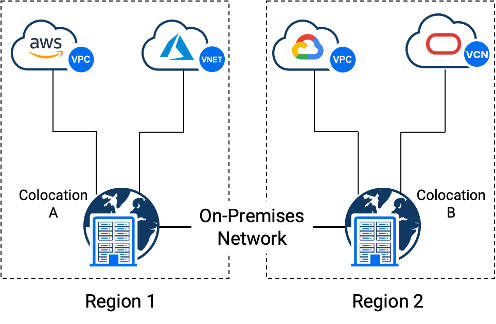
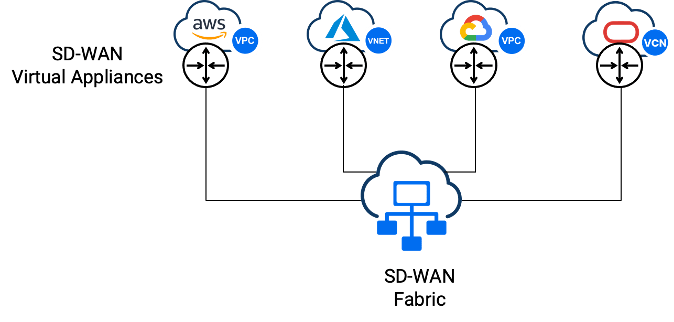
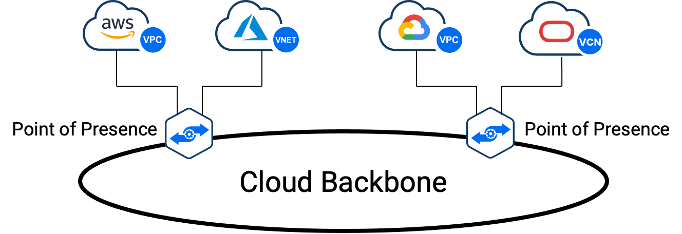
Multi-cloud network connectivity provides the essential technical foundation for seamless cloud connectivity between business-critical workloads across multiple cloud service providers. It creates a unified network infrastructure that enables organizations to strategically leverage each provider’s unique capabilities while maintaining consistent operations, governance, and security posture. Key benefits include unified network infrastructure, consistent operations and security, and support for major public cloud providers like AWS Transit Gateway (TGW), Microsoft Virtual Hub (vHub), and Google Network Connectivity Center (NCC). Learn more.
What products and services does Alkira offer?
Alkira provides solutions designed to simplify enterprise networking and connectivity challenges, including Network Infrastructure-as-a-Service (NIaaS), Global Backbone-as-a-Service, integrated security features (such as Zero Trust Network Access and next-generation firewalls), a drag-and-drop interface for network design, comprehensive visibility tools, and flexible pricing models. More details.
What are Cloud Exchange Points (CXPs) and how do they work?
Cloud Exchange Points (CXPs) are strategic connectivity hubs within a multi-cloud network architecture. They deliver enterprise-grade routing capabilities without infrastructure complexity, streamline security service implementation, and optimize inter-cloud data flows to enhance application performance. CXPs also support comprehensive segmentation for compliance requirements and abstract provider differences into a consistent operational model. Learn more.
What is network segmentation in a multi-cloud environment?
Network segmentation establishes distinct security domains aligned with business units or data sensitivity, implementing uniform access controls for regulatory compliance and fine-grained protection of high-value assets. In cross-cloud environments, segmentation ensures a consistent security posture regardless of where workloads reside. Watch: Multi-Cloud Network Segmentation: One Technique Across ALL Clouds!
How does Alkira support cloud network automation?
Alkira's cloud network automation standardizes configurations to reduce provisioning time from weeks to minutes, supports DevOps practices through infrastructure-as-code, and enables policy-driven governance aligned with business requirements. This transforms network operations into a strategic enabler for digital transformation initiatives.
What is Alkira's global backbone-as-a-service?
Alkira's global backbone-as-a-service leverages cloud provider infrastructure to deliver scalable, reliable, and low-latency connectivity across geographies. It reduces deployment times from months to minutes and dynamically scales bandwidth to match organizational needs. Learn more.
Features & Capabilities
What are the key features and benefits of Alkira's platform?
Key features include Network Infrastructure-as-a-Service, global backbone-as-a-service, integrated security (Zero Trust Network Access and next-generation firewalls), ease of use with a drag-and-drop interface, comprehensive visibility, cost savings (up to 40% lower TCO), and scalability. Alkira reduces cloud setup time by 96% and network management time by 47%. More details.
Does Alkira offer integrated security and compliance features?
Yes, Alkira integrates advanced security features such as Zero Trust Network Access (ZTNA) and next-generation firewalls. Alkira is SOC 2 and PCI-DSS compliant, ensuring robust operational controls and protection of sensitive data. More on compliance.
What integrations does Alkira support?
Alkira integrates with Cisco SD-WAN, Palo Alto Networks, Fortinet NGFW, F5, Splunk, ServiceNow, Infoblox, Aruba SD-WAN, Terraform, and Itential Automation Platform. These integrations enable secure, scalable, and automated multi-cloud networking. See all technology partners.
Does Alkira provide APIs for integration and automation?
Yes, Alkira offers APIs, including billing APIs that provide real-time cloud network cost data for integration with cost management tools and dashboards. Learn more.
What technical documentation and resources are available?
Alkira provides whitepapers, solution briefs, and a detailed wiki for technical documentation. Resources include the On Demand Next-Generation Cloud Firewalls whitepaper and a dedicated wiki. Solution briefs | Wiki
Pricing & Plans
What is Alkira's pricing model?
Alkira offers flexible pricing, including consumption-based (pay-as-you-go) and commitment-based (fixed) options. Pricing is determined by the quantity and size of network elements, connectors, firewalls, and data egress. Customers can view live pricing details from the portal or via APIs. See Alkira's Pricing Page.
Use Cases & Benefits
What business impact can customers expect from Alkira?
Customers can expect operational efficiency (96% reduction in cloud setup time, 47% reduction in network management time), up to 40% lower TCO, enhanced security, scalability, business resilience, and support for digital transformation. More details.
What pain points does Alkira solve for its customers?
Alkira addresses securing distributed workforces, simplifying complex multi-cloud and hybrid networking, providing comprehensive visibility and governance, and delivering high-performance, scalable networking. Learn more.
Who can benefit from Alkira's solutions?
Alkira is designed for mid-to-large enterprises across industries such as manufacturing, healthcare, telecommunications, financial services, biotechnology, software technology, retail, media & entertainment, and aviation. Target roles include network architects, cloud architects, security architects, IT managers, CIOs, CTOs, and CISOs.
What are some real-world case studies of Alkira customers?
Examples include Michaels transforming its network across 1,400 stores (case study), Koch Industries simplifying multicloud networking (video), Warner Hotels enhancing guest experiences (video), Chart Industries expanding globally (video), and SITA integrating on-premises and cloud environments (video). More stories at Alkira's customers page.
What industries are represented in Alkira's case studies?
Industries include manufacturing, retail, healthcare, telecommunications, financial services, biotechnology/life sciences, software technology, media & entertainment, and aviation.
Implementation & Support
How easy is it to get started with Alkira, and how long does implementation take?
Customers can implement a proof of concept in as little as 4 hours, with full production deployment typically taking about 8 weeks. Alkira's drag-and-drop interface and dedicated training platform make onboarding straightforward. Alkira Training Platform.
What training and support does Alkira provide?
Alkira offers a dedicated training platform, 24×7 monitoring, a diagnostics dashboard for troubleshooting, and dedicated support via [email protected] or support tickets. Customers receive proactive notifications about maintenance and have access to comprehensive resources. Training Platform.
How does Alkira handle maintenance, upgrades, and troubleshooting?
Alkira provides proactive notifications for maintenance, a diagnostics dashboard for live troubleshooting, 24×7 monitoring, and dedicated support to minimize downtime and operational disruptions.
Security & Compliance
What security and compliance certifications does Alkira have?
Alkira is SOC 2 and PCI-DSS compliant, demonstrating a commitment to securing customer data and maintaining robust operational controls. Integrated security features include Zero Trust Network Access and next-generation firewalls. More on compliance.
How does Alkira ensure secure connectivity for distributed workforces and applications?
Alkira integrates Zero Trust Network Access (ZTNA) and next-generation firewalls to provide secure access for distributed teams and applications, addressing vulnerabilities in traditional VPNs and perimeter-based security models.
Competition & Comparison
How does Alkira compare to Aviatrix?
Aviatrix focuses on orchestration overlays and requires deep cloud expertise. Alkira provides a true abstraction layer leveraging cloud providers' infrastructure, offers single-click provisioning, and delivers end-to-end solutions for both cloud and traditional network use cases.
How does Alkira compare to Prosimo?
Prosimo focuses on application-centric networking and is limited in addressing traditional network use cases. Alkira provides full-stack networking and security solutions, addresses both cloud and traditional network use cases, and offers scalable networks.
How does Alkira compare to Nefeli?
Nefeli uses agent-based solutions and requires manual configurations. Alkira eliminates manual configurations with automated routing setups and provides a unified platform for network infrastructure as-a-service.
How does Alkira compare to Cato?
Cato focuses on SD-WAN and is limited in multi-cloud and hybrid cloud environments. Alkira provides a global backbone-as-a-service for multi-cloud and hybrid environments and offers integrated security features like ZTNA.
Why should a customer choose Alkira over alternatives?
Alkira offers a true abstraction layer, integrated security, ease of use, global backbone-as-a-service, measurable ROI, vendor-agnostic architecture, and comprehensive visibility. These features simplify multicloud networking and enhance operational efficiency. Learn more.
Customer Experience & Testimonials
What feedback have customers given about Alkira's ease of use?
Customers have praised Alkira for reducing deployment times and simplifying complex networking tasks. For example, a large manufacturer reduced setup from 6 months to 3 days, and Koch Industries' CTO highlighted the ability to design and deploy networks in hours. See more testimonials.
Company Information
What is Alkira's vision and mission?
Alkira's vision is to transform enterprise connectivity by simplifying cloud networking for the AI era. The mission is to eliminate the complexity of traditional hardware-dependent networking by providing a cloud-native solution that seamlessly connects hybrid and multi-cloud environments. More about Alkira.
Who are Alkira's founders and what is the company's background?
Alkira was founded by the creators of Viptela (acquired by Cisco in 2017). The company has been recognized as a Gartner Cool Vendor, received the 2024 Excellence Award from Cloud Computing Magazine, and was listed on CRN’s 2023 Stellar Startups List. Company page.
Who are some of Alkira's customers?
Alkira serves Fortune 100 enterprises, leading system integrators, and global managed service providers. Notable customers include Michaels, Koch Industries, Warner Hotels, and SITA. See customer stories.
Multi-Cloud Network Segmentation
How does Alkira enable multi-cloud network segmentation across all clouds?
Alkira delivers a unified approach to network segmentation, allowing organizations to implement one technique across all major cloud providers. This ensures consistent security and compliance regardless of cloud environment. Watch the Multi-Cloud Network Segmentation: One Technique Across ALL Clouds! video