How does Alkira help healthcare organizations connect applications and manage sensitive patient data?
Alkira enables healthcare providers to securely connect applications and manage sensitive patient data across multiple regions and facilities. The platform supports real-time access to electronic health records (EHR), imaging, and test results for doctors and clinicians, while ensuring compliance and secure storage. Alkira's Network Infrastructure-as-a-Service (NIaaS) provides high-bandwidth, low-latency connectivity between on-premises and cloud environments, supporting telehealth, remote surgery, and real-time imaging use cases. Learn more.
What specific challenges in healthcare networking does Alkira address?
Alkira addresses challenges such as secure remote access and encryption for patient data, high bandwidth for large medical images, efficient connectivity for latency-sensitive applications (e.g., telehealth, remote surgery), integration with third-party vendors (even with overlapping IP addresses), seamless cloud-to-on-premises reachability, and the need for highly available, resilient networks to meet strict SLA requirements. Source.
How does Alkira support healthcare mergers and acquisitions?
Alkira simplifies network integration during healthcare mergers and acquisitions by providing extensive NAT capabilities to resolve overlapping IP addresses and enabling rapid, policy-driven connectivity between independently designed networks. This reduces integration time and complexity, supporting business continuity and compliance. Source.
Can Alkira help with third-party affiliations and vendor connectivity in healthcare?
Yes, Alkira enables secure, policy-driven connectivity to third-party vendors and clinics, even when networks have overlapping IP ranges. The platform provides granular NAT and segmentation, allowing healthcare providers to maintain isolation and control over third-party access to medical applications. Source.
What are some real-world examples of Alkira supporting healthcare organizations?
Alkira has supported large healthcare providers in managing inter-region connectivity and simplifying multicloud deployment, enabling secure access to sensitive patient information for both local and remote users. For a detailed case study, see this healthcare provider case study.
Features & Capabilities
What are the key features of Alkira's Network Infrastructure-as-a-Service for healthcare?
Key features include:
High-bandwidth, scalable connectivity for large medical data sets and imaging
End-to-end encryption and secure remote access for compliance
Low-latency connections for real-time applications (telehealth, remote surgery)
Granular NAT for overlapping IP addresses
Network segmentation for third-party isolation
High availability and redundancy across multiple clouds and regions
Seamless firewall integration with vendors like Fortinet, Check Point, and Palo Alto
Automation with Terraform for large-scale deployments
Does Alkira support integration with leading security and networking vendors?
Yes, Alkira integrates with leading vendors such as Fortinet, Check Point, and Palo Alto Networks for seamless firewall and traffic inspection. It also supports integrations with Cisco SD-WAN, F5, Splunk, ServiceNow, Infoblox, Aruba SD-WAN, Terraform, and Itential Automation Platform. See full list.
How does Alkira ensure high availability and redundancy for healthcare networks?
Alkira's infrastructure is designed for high resilience and redundancy, spanning multiple regions and clouds (AWS, Azure, GCP, OCI). This architecture supports strict SLA requirements and ensures continuous access to critical healthcare applications and data. Source.
Can Alkira automate network infrastructure deployment for large healthcare organizations?
Yes, Alkira supports automation with Terraform, enabling large-scale, repeatable network infrastructure deployments. This streamlines provisioning and management for complex healthcare environments. Learn more.
Does Alkira provide APIs for integration with other tools?
Yes, Alkira offers APIs, including billing APIs for real-time cloud network cost data, which can be integrated with cost management tools and dashboards. Learn more.
Security & Compliance
How does Alkira address security and compliance requirements for healthcare?
Alkira is SOC 2 and PCI-DSS compliant, ensuring robust operational controls and protection of sensitive data, including cardholder and patient information. The platform integrates advanced security features such as Zero Trust Network Access (ZTNA) and next-generation firewalls, supporting secure connectivity for distributed healthcare workforces and applications. Learn more.
What security features are built into Alkira's platform?
Alkira includes Zero Trust Network Access (ZTNA), next-generation firewalls, end-to-end encryption, and policy-driven segmentation. These features help healthcare organizations meet compliance requirements and protect sensitive patient data. Learn more.
Implementation, Ease of Use & Support
How quickly can healthcare organizations implement Alkira's solution?
Healthcare organizations can implement a proof of concept in as little as 4 hours, with full production deployment typically completed in about 8 weeks. Alkira's drag-and-drop interface and dedicated training resources make onboarding fast and straightforward. Training Platform.
How easy is it to get started with Alkira?
Getting started is simple due to Alkira's intuitive drag-and-drop interface, comprehensive training platform, and dedicated support. No extensive technical expertise or additional staffing is required. Learn more.
What support and maintenance services does Alkira provide?
Alkira offers 24×7 monitoring, proactive maintenance notifications, a diagnostics dashboard for troubleshooting, and dedicated support via email or support ticket. These services ensure smooth operations and rapid issue resolution. Contact support.
What training resources are available for healthcare IT teams?
Alkira provides a dedicated training platform with detailed guidance, demos, and resources to help IT teams efficiently learn and implement the solution. Access training.
Pricing & Plans
What is Alkira's pricing model for healthcare organizations?
Alkira offers flexible pricing, including consumption-based (pay-as-you-go) and commitment-based (fixed) models. Pricing is determined by the quantity and size of network elements, connectors, firewalls, and data egress. Customers can view live pricing details from the portal or via APIs. Learn more.
Performance & Business Impact
What performance improvements can healthcare organizations expect with Alkira?
Alkira reduces cloud setup time by 96% and network management time by 47%, enabling faster deployment and streamlined operations. The platform can deliver up to 40% lower total cost of ownership (TCO) compared to traditional solutions, with measurable ROI benefits. Learn more.
How does Alkira support scalability and business resilience for healthcare?
Alkira automatically adjusts network infrastructure to match bandwidth demand, enabling rapid scalability and high-performance networking. The platform simplifies multicloud networking, ensuring agility and continuity in dynamic healthcare environments. Learn more.
Competition & Differentiation
How does Alkira compare to other cloud networking solutions for healthcare?
Alkira differentiates itself by providing a true abstraction layer leveraging cloud providers' infrastructure, single-click provisioning, integrated security, and a vendor-agnostic approach. Unlike competitors such as Aviatrix (which focuses on orchestration overlays), Prosimo (application-centric networking), Nefeli (agent-based solutions), and Cato (SD-WAN focus), Alkira delivers end-to-end solutions for both cloud and traditional network use cases, with full-stack networking and security, and seamless scalability. Learn more.
Why should healthcare organizations choose Alkira over alternatives?
Healthcare organizations should consider Alkira for its ease of use (drag-and-drop interface), rapid deployment, integrated security, vendor-agnostic flexibility, measurable ROI, and comprehensive visibility. Alkira's platform is designed to simplify complex multicloud and hybrid networking challenges, making it ideal for healthcare's demanding requirements. Learn more.
Customer Proof & Testimonials
What feedback have healthcare customers given about Alkira?
Healthcare customers have praised Alkira for its ability to reduce deployment times and simplify complex networking. For example, a large healthcare provider used Alkira to manage inter-region connectivity and simplify multicloud deployment. Read the case study.
Are there testimonials from other industries relevant to healthcare?
Yes, Alkira has received positive feedback from customers in manufacturing, retail, financial services, and more. For example, Matt Hoag, CTO at Koch Industries, said, "We had gone from a mass of complexity and months of work to a dashboard that allowed us simply to draw our network and deploy it in a few hours." See more testimonials.
Technical Documentation & Resources
Where can I find technical documentation and resources for Alkira?
What industries has Alkira supported with its solutions?
Alkira has supported organizations in healthcare, manufacturing, retail, telecommunications, financial services, biotechnology, software technology, media & entertainment, and aviation. See case studies.
Connecting Healthcare Applications using Alkira Network Infrastructure-as-a-Service
Summarize with AI
Typically, medium and large-size Healthcare providers manage many medical facilities across multiple regions. These providers deal with massive amounts of patients’ sensitive information that must be stored securely. They also provide secure access to local and remote users from various locations to access the patient’s information.
Based on the above information, we can see what some of the essential requirements for healthcare applications are:
Doctors need access to complete information on a patient’s electronic health record (EHR), prescriptions, test results, and imaging so that they are better equipped to find the correct diagnosis and identify the best course of treatment.
Data-driven decisions based on substantial information sets can help healthcare professionals and researchers to spot patterns, uncover insights, and deliver a higher standard of care. The cloud provides unprecedented scaling, bandwidth (BW), data integration, and access advantages.
Healthcare providers give access to third-party vendors and clinics to provide patients’ information.
Healthcare mergers and acquisitions combine two or more healthcare companies, hospitals, or physician practices. Typically, merging entities aim to lower healthcare costs and improve the quality of care through these transactions.
Clinics and hospitals have patient data stored in the cloud to be accessible in real-time and meet compliance requirements. This requires healthcare providers to provide remote access to doctors and do end-to-end encryption to secure patient-sensitive information.
High Bandwidth for Large Data Sets
Medical Records could consist of medical images such as X-rays, computed tomography (CT) scans, and mammograms) high BW is required to access these applications from on-premise to the cloud.
Efficient Connectivity for Latency Sensitive Applications
Doctors need to access patient information in real-time for telehealth use cases:
Remote surgery High-speed data connections and low latency management information systems are essential for remote surgery.
Real-Time Imaging During an operation, a doctor can guide a surgical instrument into the best position for obtaining, for instance, a sample of suspicious cells.
Third-Party Affiliations
Health-Care organizations offer cloud-based services or apps that need to connect these services to their affiliations (retail clinics) or third-party vendors and partners’ networks. These third-party vendors and affiliations networks were designed independently, resulting in a high probability of overlapping IP ranges.
Merger & Aquisitions
Healthcare mergers and acquisitions combine two or more healthcare companies, hospitals, or physician practices. Typically, merging entities designed independently, resulting in a high probability of overlapping IP ranges.
Cloud to On-Prem reachability and vice versa
Clinics and hospitals have patient data stored in the cloud to be accessible in real-time and meet compliance requirements.
Highly Available and Resilient Network
SLA requirements are strict for any healthcare provider since they manage critical infrastructure and must ensure that data is always available. This requires a highly resilient network that provides redundancy across different regions and clouds.
Alkira for Healthcare
Alkira seamlessly solves all the healthcare providers’ network requirements and challenges mentioned above.
Alkira Network Infrastructure-as-a-Service is the first global unified multi-cloud network delivered as-a-service. Alkira allows healthcare customers to quickly onboard their on-premises infrastructure leveraging various methods, including AWS Direct Connect, Azure Express Routes, and IPsec Connections from third-party vendors or Hospitals (healthcare providers) into the Alkira Cloud Exchange Points. At the same time, customers also connect their cloud workloads (VPCs, VNETs) to the Alkira Cloud Exchange Points achieving seamless high-bandwidth multi-cloud connectivity for healthcare applications. Alkira’s solution also allows customers who want to inspect or steer the traffic between on-premises to cloud or multi-cloud environments to use the policy drive framework to inspect or steer traffic as per the requirements.
Figure 2: Alkira Network Infrastructure-as-a-Service for HealthcareThe above architecture diagram shows a high-level topology for a typical healthcare provider leveraging Alkira Networking. On the on-premises side, hospitals and clinics or third-party vendors would build connectivity into the Alkira CXP using either private connections like Direct Connect or Express Route or IPsec connections. On the cloud side, the connections will be from the VPCs/VNETs to the CXP, where the medical applications exist. Once this is completed, end-to-end connectivity is established between the on-premises and cloud environments. Customers can also choose to inspect traffic using firewall as per their requirements using Alkira’s policy-driven framework.
Alkira Solution Benefits
High Bandwidth
Alkira provides the benefits of High BW connectivity to cloud applications from on-prem; customers can scale up and down based on their traffic requirements. This can help access large medical record images, X-rays, or patient scans.
Overlapping IP addresses
Alkira solution provides extensive NAT capabilities to help solve the requirement for overlapping IP addresses. The solution provides the granularity to match required conditions and then adds NAT. Third-Party vendors require those NAT configurations on the healthcare provider side. This helps when third-party partners need to access the medical applications and use the same IP address space.
Latency
Customers can connect to the Alkira CXP in the nearest region depending on where the applications exist and then leverage Alkira Backbone to have low latency while connecting to these applications. This can help with real-time surgeries and real-time imaging requirements.
Segmentation
Alkira can provide isolation of workloads and communication from the third-party vendors that a healthcare provider partners with. Traffic across segments can be inspected as per requirement. If the provider wants to maintain an isolated network for the Third-party vendors, this can be done quickly.
High availability and Redundancy
Alkira infrastructure is highly resilient and redundant and can spread across multiple regions and availability across multiple clouds like AWS, Azure, GCP, OCI, etc. This will allow the providers to meet their critical SLA requirements.
Seamless Firewall Integration
Alkira provide seamless integration with vendors like Fortinet, Check Point and Palo Alto for traffic inspection for any type of traffic flows.
Secure Access
Alkira provides encryption for the data and secure access capabilities to accessing cloud applications which help the providers maintain data integrity.
Automation with Terraform
Network Infrastructure deployment at a large scale requires automation, and Alkira helps to solve this wherein the customer can use terraform to provision the network infrastructure for Alkira.
Conclusion
Alkira Network Infrastructure-as-a-Service provides an easy and secure solution for healthcare providers. Reach out and schedule a demo today to learn more about how Alkira can help simplify networking for your organization.
You can also try our Cloud Insights tool for free, giving instant inventory and insights into your cloud networking resources.
Ahmed Abeer is a Sr. Product Manager at Alkira, where he is responsible for building a best-in-class Multi-Cloud Networking and Security Product. He has been in Product Management for more than ten years in different big and small organizations. He has worked with large enterprise and service provider customers to enable LTE/5G MPLS network infrastructure, automate Layer 3 Data Center, enable Next-Gen Multi-Cloud architecture, and define customers' Multi-Cloud strategies. Ahmed's technical expertise in Cloud Computing and Layer 2/Layer 3 network technologies. Ahmed is a public speaker at various conferences & forums and holds a Master's Degree in Computer Engineering.
DK
About the author
Deepesh Kumar
Deepesh Kumar is a Solutions Architect and product specialist in the computer networking industry with over 8 years of experience. He currently works as part of the post sales team at Alkira and focuses on working with customers to design and deploy the Alkira solution. Prior to working here, he worked at Viptela which was acquired by Cisco Systems. He holds a masters degree from San Jose State University.
The enterprise network was built for an earlier era: Workloads lived in data centers, traffic patterns were more predictable and adding capacity often meant another hardware cycle. That model no longer matches how enterprises operate. Applications, users, data, partners, clouds and AI workloads now span many environments at once. East-west workload movement is growing across...
Enterprise networks are expected to run 24/7, and the teams responsible for them need visibility wherever work happens. Cloud environments, partner connections, security services, and provisioning workflows are constantly changing. When something needs attention, network and operations teams need a fast way to understand what happened, assess impact, and take the right next step. That...
Enterprises are moving quickly on AI, but many are still running networking models designed for a slower, more centralized and static era. Today’s network has to connect clouds, data centers, campuses, branches, partner environments, and increasingly private AI infrastructure while enforcing consistent policy across all of it. That creates a new operational reality: every new...



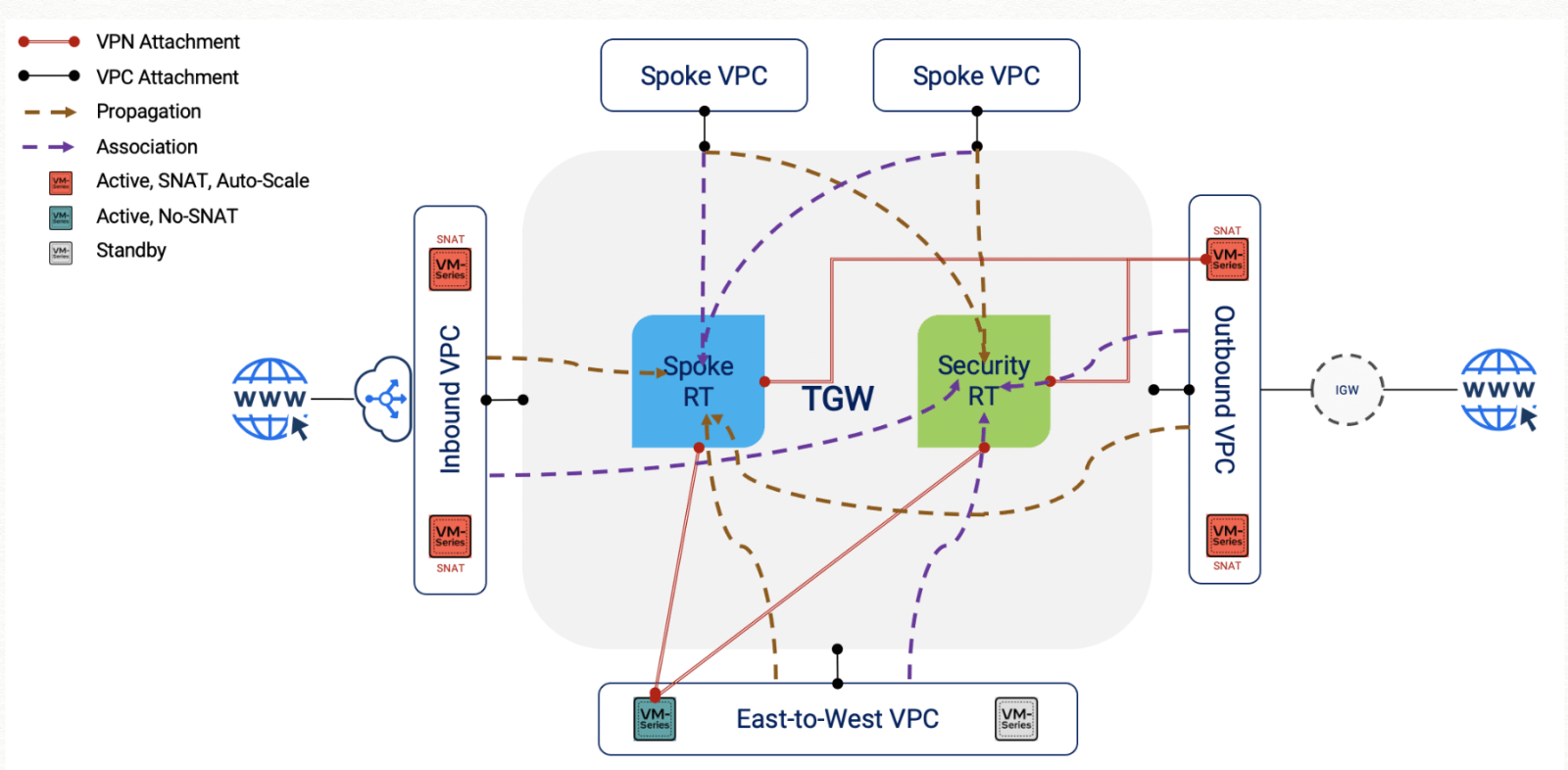 Figure 1: Healthcare Cloud Architecture Example
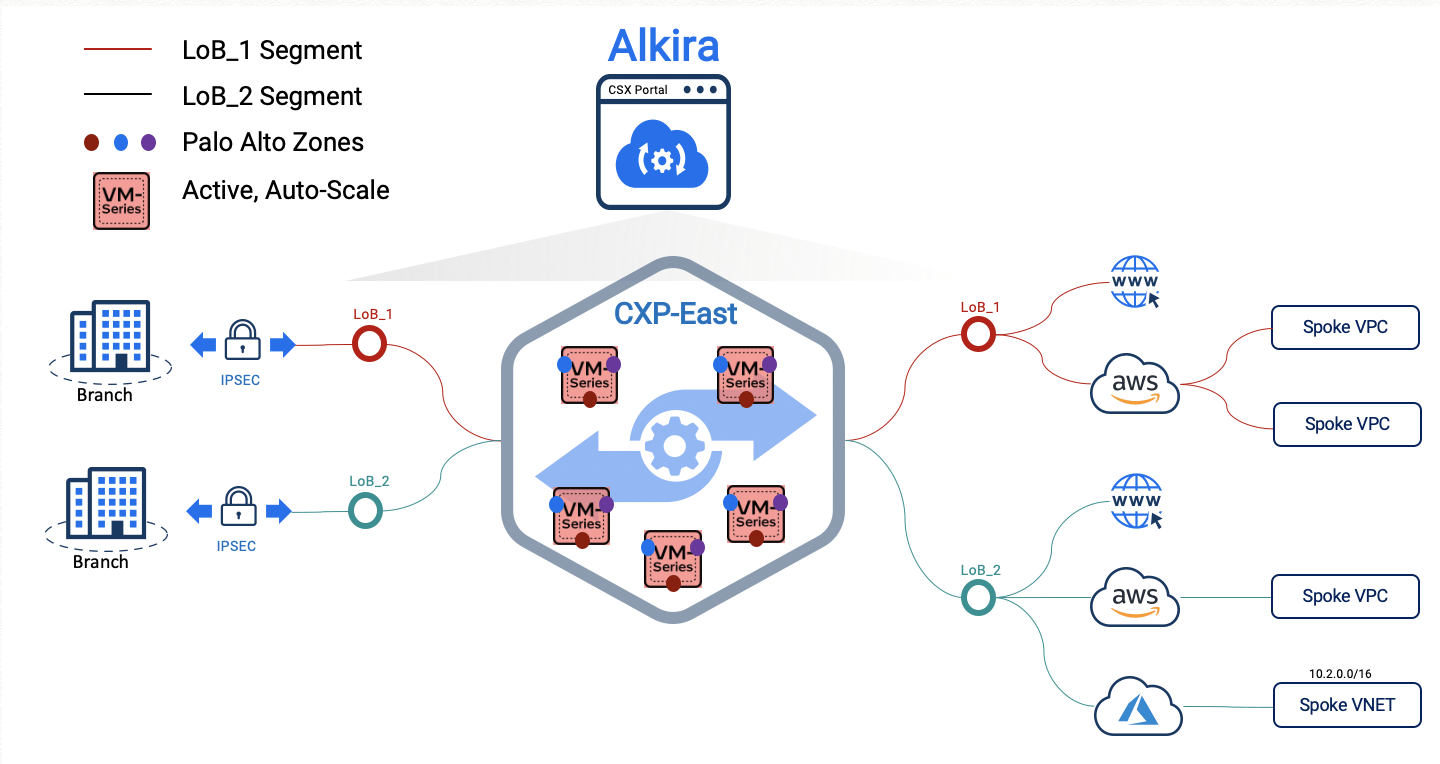 Figure 2: Alkira Network Infrastructure-as-a-Service for HealthcareThe above architecture diagram shows a high-level topology for a typical healthcare provider leveraging Alkira Networking. On the on-premises side, hospitals and clinics or third-party vendors would build connectivity into the Alkira CXP using either private connections like Direct Connect or Express Route or IPsec connections. On the cloud side, the connections will be from the VPCs/VNETs to the CXP, where the medical applications exist. Once this is completed, end-to-end connectivity is established between the on-premises and cloud environments. Customers can also choose to inspect traffic using firewall as per their requirements using Alkira’s policy-driven framework.