What is multi-cloud inline traffic inspection using Alkira?
Multi-cloud inline traffic inspection using Alkira enables organizations to monitor and secure network traffic across multiple cloud environments in real time. Alkira's firewall service allows or denies network traffic based on customizable traffic policies, supporting use cases such as inspecting traffic between VPC/VNets (East-West), between cloud and on-premises (North-South), and outbound internet traffic from the cloud (Egress). This approach simplifies complex configurations and enhances security across hybrid and multi-cloud deployments. Learn more.
What specific use cases does Alkira support for traffic inspection?
Alkira supports three primary use cases for traffic inspection:
Inspecting traffic between VPC/VNets (East-West Traffic)
Inspecting traffic between Cloud and On-Premises (North-South Traffic)
Inspecting outbound internet traffic from the cloud (Egress Traffic)
These use cases are managed through Alkira's policy-driven approach, allowing flexible and efficient traffic steering and inspection across cloud and on-premises environments. Source.
How does Alkira simplify multi-cloud and hybrid cloud networking?
Alkira eliminates the complexity of traditional cloud service provider (CSP) approaches by providing a unified platform that abstracts away manual configurations and disparate networking constructs. With Alkira, users can create connectivity and traffic policies in just two steps, regardless of the underlying cloud provider. This reduces deployment times from months to minutes and enables seamless integration across AWS, Azure, on-premises, and internet traffic. Learn more.
What are the main benefits of using Alkira for multi-cloud traffic inspection?
Key benefits include:
Cost-Effectiveness: Use the same set of firewalls for multiple use cases, reducing the need for multiple appliances per region or cloud.
Automated Firewall Management: Alkira automates firewall lifecycle management and configuration.
Troubleshooting Tools: Built-in tools such as packet capture, flow capture, ping, and traceroute help quickly identify and resolve connectivity issues.
How does Alkira's approach differ from traditional CSP-native methods for traffic inspection?
Traditional CSP-native approaches require separate security VPCs/VNETs, manual configuration of networking constructs, and multiple firewalls per region or cloud, leading to complexity and higher costs. Alkira provides a unified abstraction layer, allowing centralized policy management and the use of a single set of firewalls across clouds and regions. This results in lower costs, simplified operations, and improved scalability. Source.
Features & Capabilities
What features does Alkira offer for cloud networking and security?
Alkira offers:
Network Infrastructure-as-a-Service (NIaaS)
Global Backbone-as-a-Service
Integrated security features, including Zero Trust Network Access (ZTNA) and next-generation firewalls
Drag-and-drop interface for network design and deployment
Single-pane-of-glass visibility and management
Automated firewall lifecycle and resource management
These integrations enable secure, scalable, and automated cloud networking. See all partners.
Does Alkira provide APIs for integration and automation?
Yes, Alkira offers APIs, including billing APIs that provide real-time cloud network cost data for integration with cost management tools and dashboards. These APIs support automated synthesis of billing data and recurring cost optimization efforts. Learn more.
What technical documentation and resources are available for Alkira?
Alkira provides a range of technical resources, including:
Integrated security features such as Zero Trust Network Access (ZTNA) and next-generation firewalls
Customers are also encouraged to manage user access and follow security best practices. Read more.
What security features are integrated into Alkira's platform?
Alkira integrates advanced security features, including Zero Trust Network Access (ZTNA), next-generation firewalls, and automated firewall lifecycle management. These features ensure secure connectivity for distributed workforces and applications, addressing vulnerabilities in traditional VPNs and perimeter-based models.
Pain Points & Solutions
What common pain points does Alkira solve for customers?
Alkira addresses several key pain points:
Securing distributed workforce and applications with integrated security
Simplifying complex multicloud and hybrid cloud networking
Providing comprehensive visibility and governance with single-pane-of-glass tools
Delivering scalable, reliable, and low-latency connectivity
These solutions help organizations reduce operational complexity, improve security, and accelerate digital transformation. Learn more.
How does Alkira's approach to traffic inspection address design and operational challenges?
Alkira's policy-driven approach allows users to manage traffic inspection across clouds and regions without deploying multiple firewalls or handling complex configurations. Automated firewall management, centralized visibility, and built-in troubleshooting tools reduce operational overhead and speed up issue resolution.
Can you share examples of Alkira solving real customer challenges?
Yes. For example, Michaels transformed its network across 1,400 stores in record time, ensuring secure and seamless connectivity during peak season (case study). Koch Industries reduced network complexity and improved agility with Alkira (video). Warner Hotels enhanced networking efficiency and visibility (video).
Performance & Business Impact
What measurable business impact can customers expect from Alkira?
Customers can expect:
Up to 96% reduction in cloud setup time
47% reduction in network management time
Up to 40% lower total cost of ownership (TCO) compared to traditional solutions
Enhanced security and business resilience
Rapid scalability and improved operational efficiency
How easy is it to implement Alkira, and what is the typical deployment timeline?
Alkira enables proof of concept implementation in as little as 4 hours, with full production deployment typically completed in about 8 weeks. The drag-and-drop interface and dedicated training resources make onboarding straightforward, even for non-technical users. Training Platform.
What feedback have customers shared about Alkira's ease of use?
Customers consistently praise Alkira's ease of use. For example:
"The IT DIY approach was going to take 6 months to be secure and redundant and all. Alkira did it for us in 3 days, and at very low cost." – Network Architect, Large Manufacturer
"We met with Alkira, and after about an hour of us explaining what we needed, we created a POC – and stood that up in a morning. Design-to-POC-setup in about 4 hours." – Sr. Director, Network Architect, Financial Company
"We had gone from a mass of complexity and months of work to a dashboard that allowed us simply to draw our network and deploy it in a few hours." – Matt Hoag, CTO at Koch Industries
Consumption-based (pay-as-you-go) pricing based on usage of provisioned elements (sites, cloud instances, network services, traffic)
Commitment-based (fixed) pricing for predictable budgeting
Pricing is determined by the quantity and size of network elements, connectors, firewalls, and data egress. Customers can view live pricing details from the portal or via APIs. See pricing details.
Competition & Comparison
How does Alkira compare to competitors like Aviatrix, Prosimo, Nefeli, and Cato?
Alkira differentiates itself by offering:
A true abstraction layer leveraging cloud providers' infrastructure for end-to-end solutions
Single-click provisioning without requiring deep cloud expertise
Integrated security features (ZTNA, next-generation firewalls)
Unified platform for both cloud and traditional network use cases
Vendor-agnostic approach, allowing free choice of security and network stack components
For example, Aviatrix focuses on orchestration overlays, Prosimo on application-centric networking, Nefeli on agent-based solutions, and Cato on SD-WAN. Alkira provides a comprehensive, scalable, and easy-to-use platform for multi-cloud and hybrid environments. Learn more.
Support & Implementation
What support and training does Alkira provide to customers?
Alkira offers:
A dedicated training platform with guidance, demos, and resources (Training Platform)
Diagnostics dashboard for live troubleshooting and visibility
These resources ensure smooth onboarding and ongoing operations.
How does Alkira handle maintenance, upgrades, and troubleshooting?
Alkira provides proactive notifications for planned or emergency maintenance, a diagnostics dashboard for troubleshooting, 24×7 monitoring, and dedicated support. These features minimize downtime and ensure operational continuity.
Industries & Customer Success
Which industries use Alkira's solutions?
Alkira serves a wide range of industries, including manufacturing, retail, healthcare, telecommunications, financial services, biotechnology/life sciences, software technology, media & entertainment, and aviation. See case studies.
Who are some of Alkira's notable customers?
Notable customers include Michaels, Koch Industries, Warner Hotels, and SITA, as well as Fortune 100 enterprises, system integrators, and managed service providers. Explore more.
Company & Vision
What is Alkira's vision and mission?
Alkira's vision is to transform enterprise connectivity by simplifying cloud networking for the AI era. Its mission is to eliminate the complexity of traditional hardware-dependent networking by providing a cloud-native solution that seamlessly connects hybrid and multi-cloud environments through a unified control plane. Learn more.
What recognition and awards has Alkira received?
Alkira has been named among America’s Best Startup Employers by Forbes, recognized as a Gartner Cool Vendor, and received the 2024 Excellence Award from Cloud Computing Magazine. It was also listed on CRN’s 2023 Stellar Startups List. Source.
Multi-Cloud Inline Traffic Inspection using Alkira
Summarize with AI
In the previous blog, we talked about the Ingress Inspection using Alkira. This blog will focus on Multi-Cloud Inline traffic inspection, which helps you monitor your traffic from malicious actors. Alkira firewall service allows or denies network traffic for real-time flows from source to destination using traffic policies.
We will be covering the following three use-cases:
1- Inspecting traffic between VPC/VNets (East-West Traffic)
2- Inspecting Traffic between Cloud and OnPrem (North-South Traffic)
3- Inspecting the outbound internet traffic from the cloud (Egress Traffic)
Each use case will be handled differently in the native Cloud Service Provider (CSP) approach. Let’s go over each use case one by one:
Case 1: Inspecting traffic between VPC/VNets (East-West Traffic)
In the Traditional Cloud Service Provider (CSP) approach for East-West traffic inspection, a third-party firewall will be placed in a separate VPC/VNET called a Security VPC/VNET. The traffic will come from the source workload VPC to the destination workload VPC traversing the specific networking constructs (TGW, vWAN Hub, etc.) and then hit the Security VPC where we have 3rd party firewall (e.g., Palo Alto VM-Series, Fortinet FortiGate, Check Point Security Gateway, etc.) for traffic inspection before it reaches to the destination.
As you can see below in the example, many steps are required to solve this use case.
Figure 1: Inspecting traffic between VPC/VNets (East-West Traffic)
Case 2: Inspecting traffic between Cloud and OnPrem (North-South Traffic)
This case is similar to the above use case; Spoke VPC/VNET traffic is going towards On-Prem via a third-party firewall, and similar complexity exists in this use case.Figure 2: CSP Native Approach for Cloud to OnPrem Inspection
Case 3: Inspecting the Cloud outbound internet traffic (Egress Traffic)
Similar to the prior instances, the traffic will originate from the workload VPC towards the internet via the CSP Transit, as shown in the below example, and then hit the security VPC to go towards the internet. The difference here is that the Source IP of the outbound traffic towards the internet will get translated (SNAT) on the firewall.Figure 3: CSP Native Egress Inspection
Problem with this Approach:
Design Challenges at Scale
The design will look different for the above three use cases when a large-scale deployment is done. Taking the case of a single cloud but with multiple regions, setting up the security VPC for traffic inspection would be required. The challenges are even more significant if the same design is used in a multi-cloud environment.
Visibility
Visibility into traffic is a challenge in any CSP environment, which creates a problem in troubleshooting any connectivity issues. Also, since there are multiple networking constructs in each CSP, figuring out where the issue lies is a challenge.
Configuration
Different CSPs have different networking constructs in a multi-cloud environment, which means that configuring each will be complex, and managing these resources will be a pain. Also, each CSP has its own set of limitations for these resources, which creates a design problem for solving these use cases.
Alkira Approach:
Using the Alkira solution, users can handle the above use cases seamlessly once the relevant configuration has been applied to the Alkira CXP. For each of the above use cases, traffic is redirected to the FW when the policy is applied; once the traffic is inspected, it will be sent to the destination. The firewall policy on Alkira CXP gives flexibility to the user to steer the traffic depending on the use case.Figure 4: Alkira CXPs make managing and steering traffic simple and easyThe configuration has just two steps:
Create Connectivity for the cloud and on-premises connections depending on your use case. As shown in the above figure. We have three cloud connectors for AWS, Azure, and Egress Internet traffic and one DX connector towards the on-premises data center
Create a Traffic Policy to steer traffic toward the destination depending on your use case
Figure 5: Traffic Flow for each Use CaseFigure 6: The above Screenshot highlights the Overall Network Connecting On-Premise and Cloud using Alkira CXPFigure 7: The above Screenshot highlights the policy for East-West Traffic InspectionFigure 8: The above Screenshot highlights the policy for North-South Traffic InspectionFigure 9: The above Screenshot highlights the policy for Egress Traffic Inspection
Alkira Solution Benefits:
Cost-Effective
In the Alkira solution, the same set of FWs can be used for multiple use cases, including inspecting east-west, north-south, and egress traffic which means that the user will not have to pay for various FWs based on region or the CSP that is being used.
Optimized & Efficient Design
The policy framework in the Alkira solution makes it easy to perform traffic redirection to the FW for any of the use cases mentioned above. This makes the design simpler since the user does not need to deploy multiple FWs for traffic inspection depending on multi-region or multi-cloud deployment.
FW resource Management
The Akira solution automates the FW lifecycle management and configuration of the FW infrastructure (interfaces, zones, etc.)
Troubleshooting
Troubleshooting tools such as Packet capture, flow capture, ping, and traceroute are part of the solution and help find the root cause of connectivity issues.
Modernize your cloud network with Alkira
To learn more about how Alkira can help simplify cloud networking for your organization, reach out and schedule a demo today.
You can also try our Cloud Insights tool for free here, giving you instant inventory and insights into your cloud networking resources.
Ahmed Abeer is a Sr. Product Manager at Alkira, where he is responsible for building a best-in-class Multi-Cloud Networking and Security Product. He has been in Product Management for more than ten years in different big and small organizations. He has worked with large enterprise and service provider customers to enable LTE/5G MPLS network infrastructure, automate Layer 3 Data Center, enable Next-Gen Multi-Cloud architecture, and define customers' Multi-Cloud strategies. Ahmed's technical expertise in Cloud Computing and Layer 2/Layer 3 network technologies. Ahmed is a public speaker at various conferences & forums and holds a Master's Degree in Computer Engineering.
DK
About the author
Deepesh Kumar
Deepesh Kumar is a Solutions Architect and product specialist in the computer networking industry with over 8 years of experience. He currently works as part of the post sales team at Alkira and focuses on working with customers to design and deploy the Alkira solution. Prior to working here, he worked at Viptela which was acquired by Cisco Systems. He holds a masters degree from San Jose State University.
The enterprise network was built for an earlier era: Workloads lived in data centers, traffic patterns were more predictable and adding capacity often meant another hardware cycle. That model no longer matches how enterprises operate. Applications, users, data, partners, clouds and AI workloads now span many environments at once. East-west workload movement is growing across...
Enterprise networks are expected to run 24/7, and the teams responsible for them need visibility wherever work happens. Cloud environments, partner connections, security services, and provisioning workflows are constantly changing. When something needs attention, network and operations teams need a fast way to understand what happened, assess impact, and take the right next step. That...
Enterprises are moving quickly on AI, but many are still running networking models designed for a slower, more centralized and static era. Today’s network has to connect clouds, data centers, campuses, branches, partner environments, and increasingly private AI infrastructure while enforcing consistent policy across all of it. That creates a new operational reality: every new...


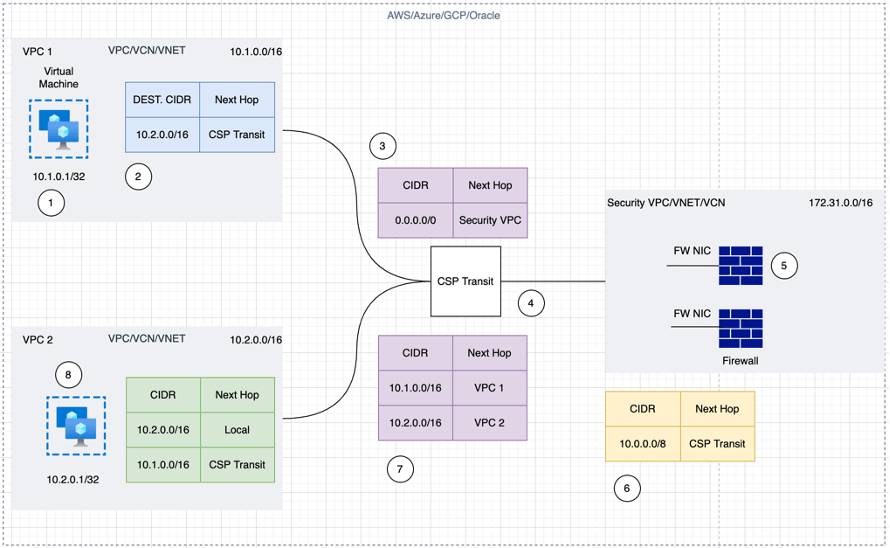 Figure 1: Inspecting traffic between VPC/VNets (East-West Traffic)
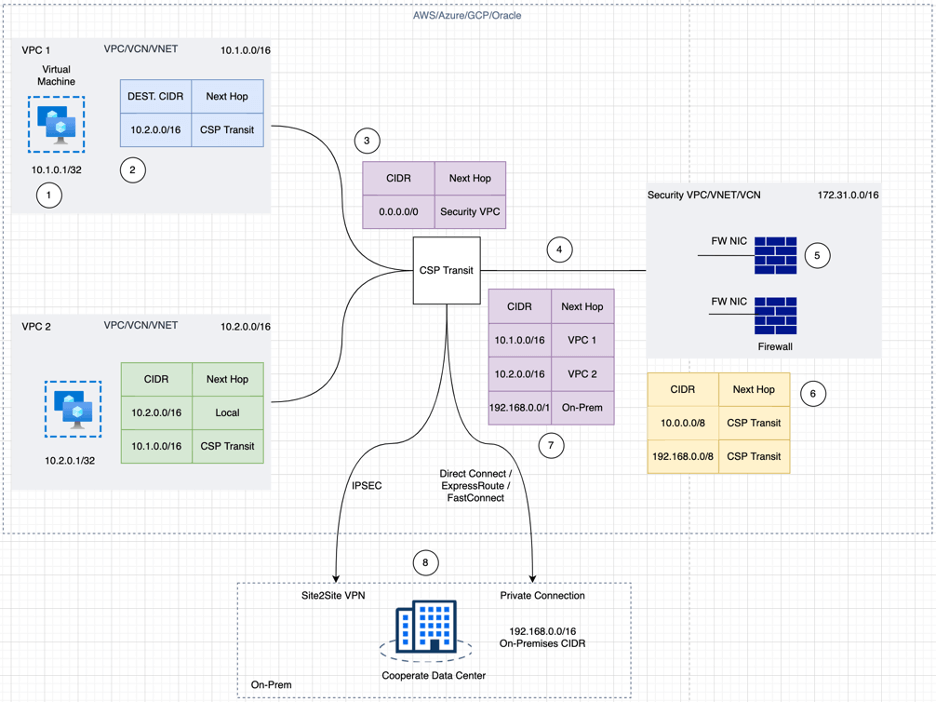 Figure 2: CSP Native Approach for Cloud to OnPrem Inspection
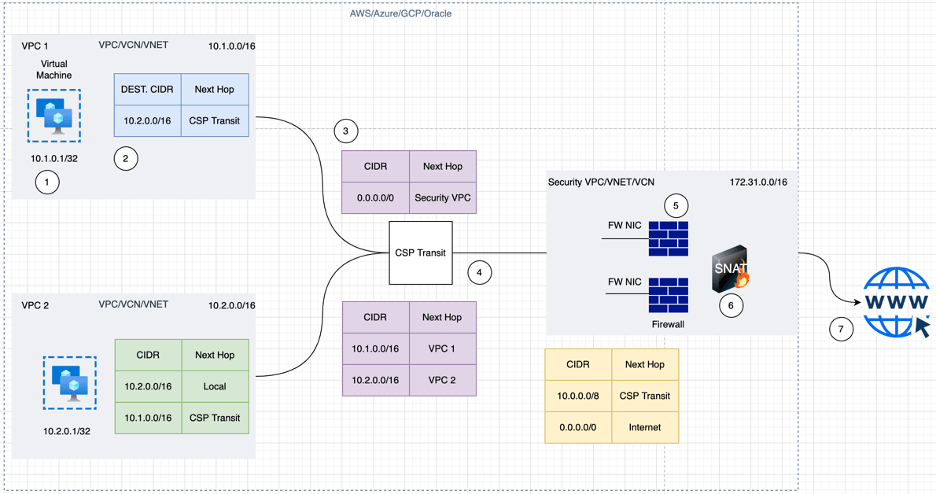 Figure 3: CSP Native Egress Inspection
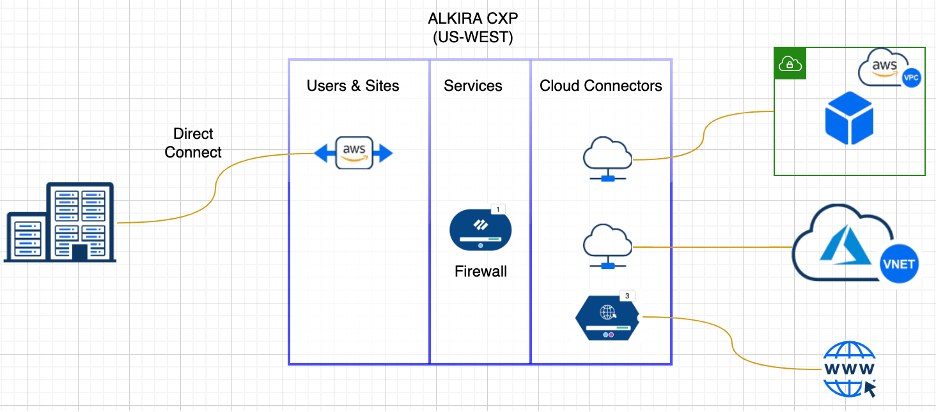 Figure 4: Alkira CXPs make managing and steering traffic simple and easy
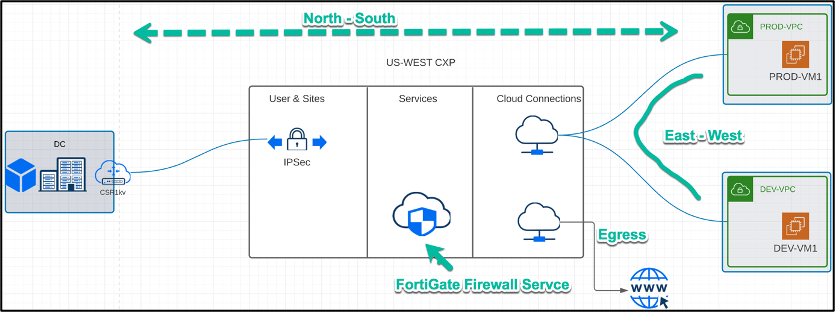 Figure 5: Traffic Flow for each Use Case
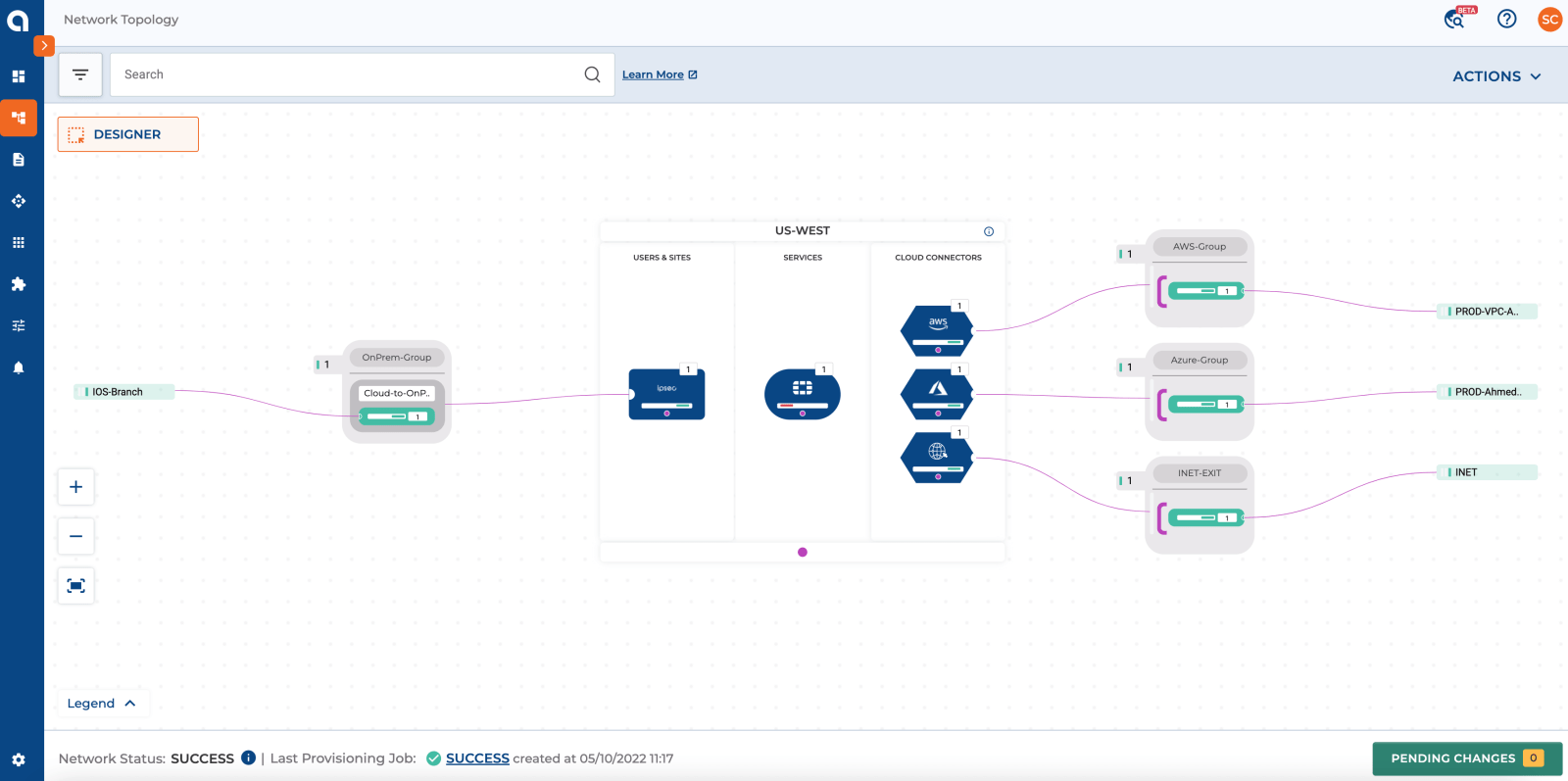 Figure 6: The above Screenshot highlights the Overall Network Connecting On-Premise and Cloud using Alkira CXP
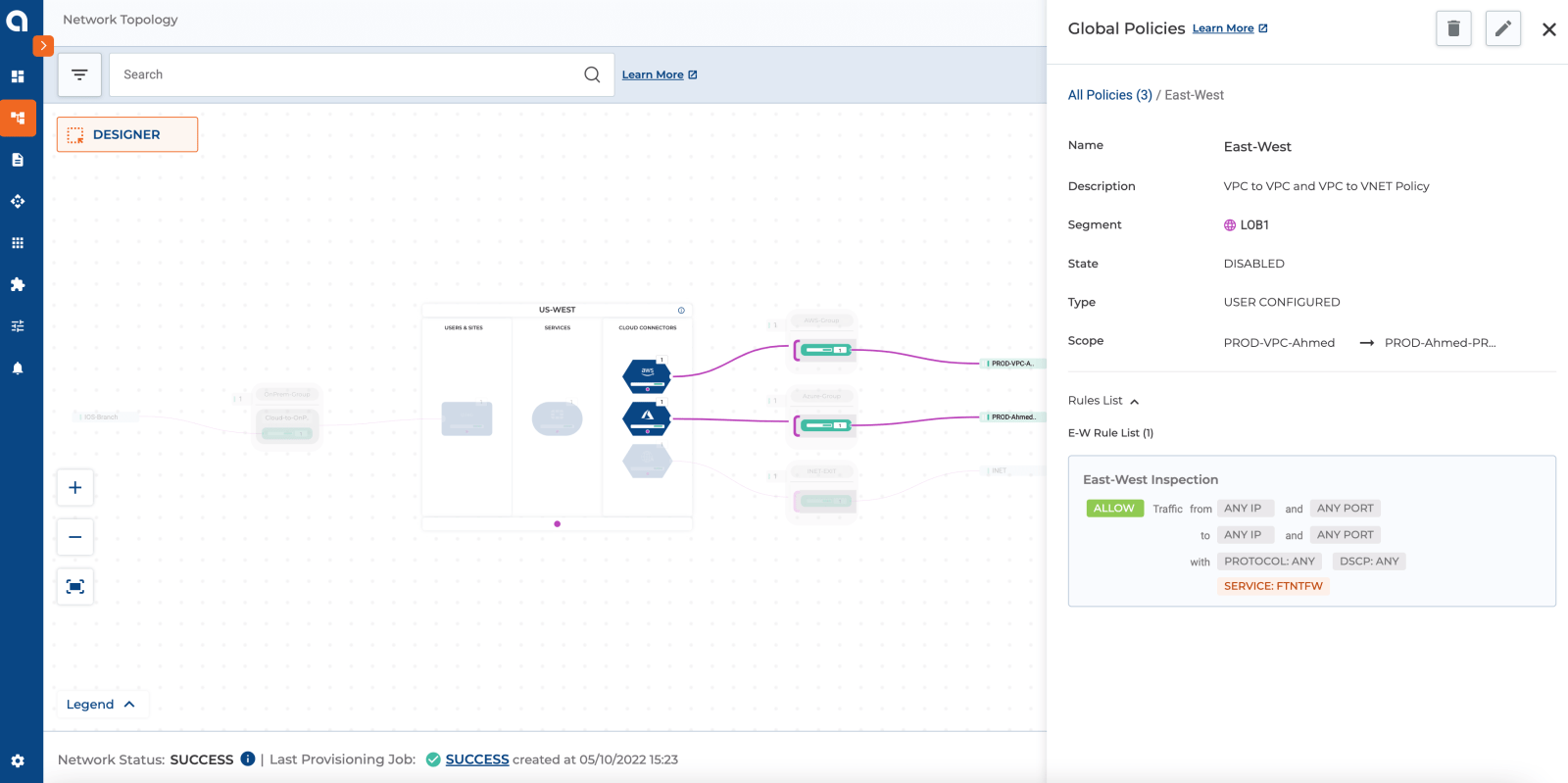 Figure 7: The above Screenshot highlights the policy for East-West Traffic Inspection
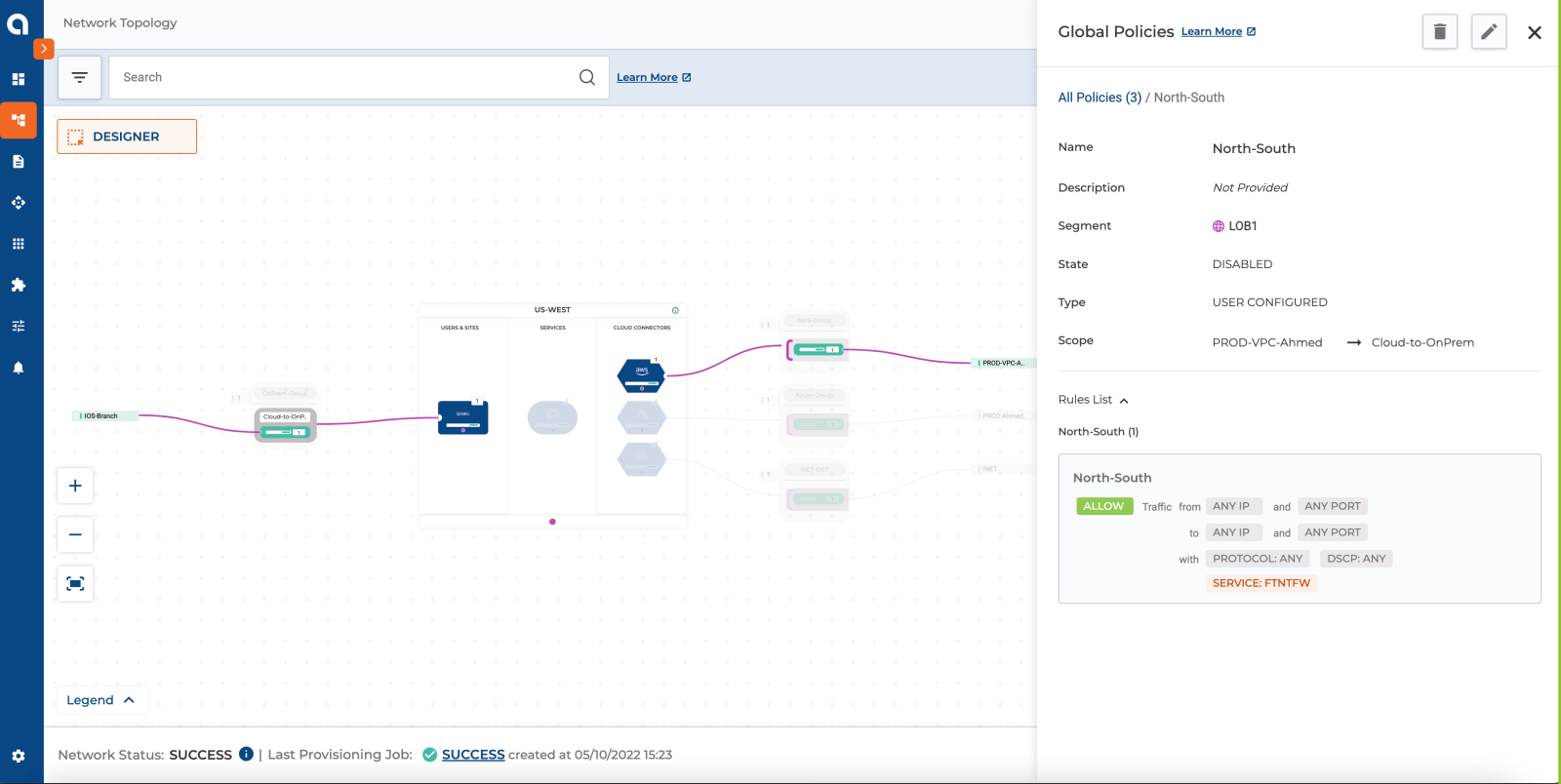 Figure 8: The above Screenshot highlights the policy for North-South Traffic Inspection
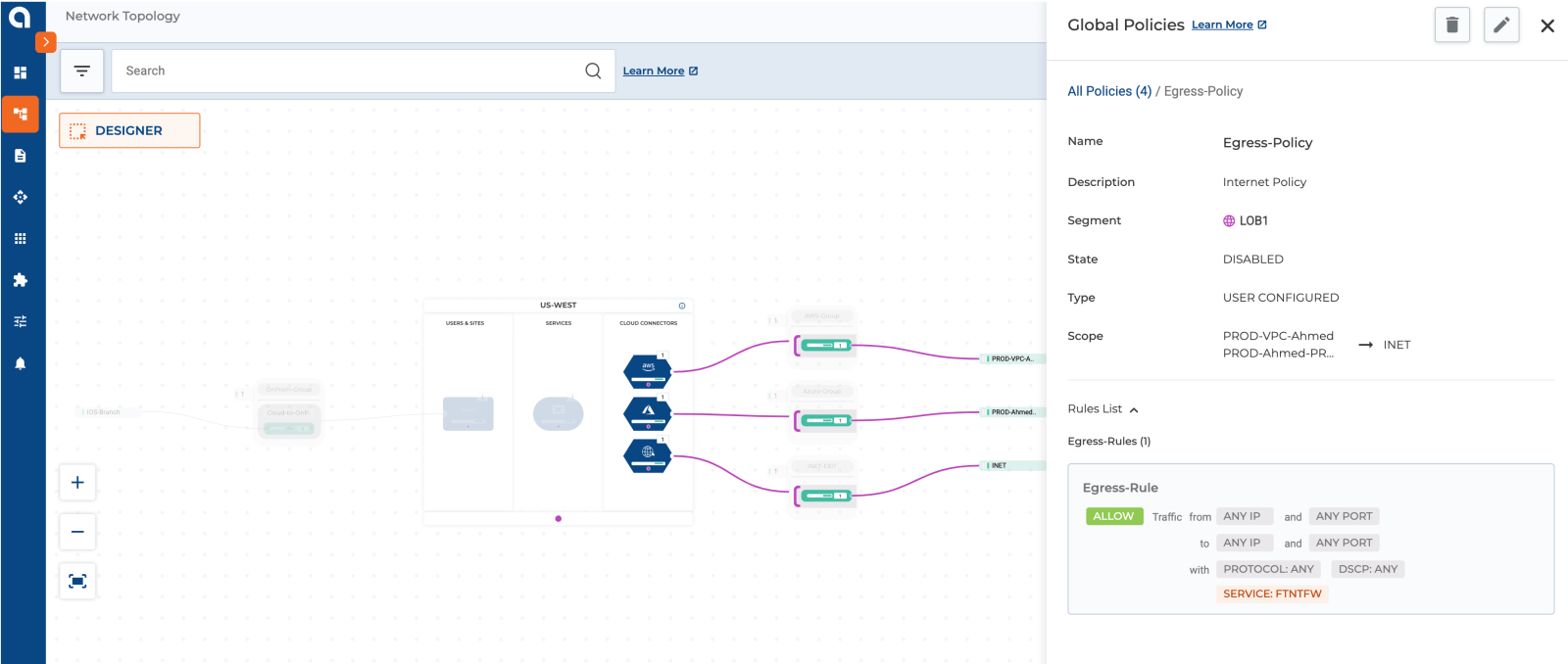 Figure 9: The above Screenshot highlights the policy for Egress Traffic Inspection