

What Network Infrastructure as a Service Actually Is
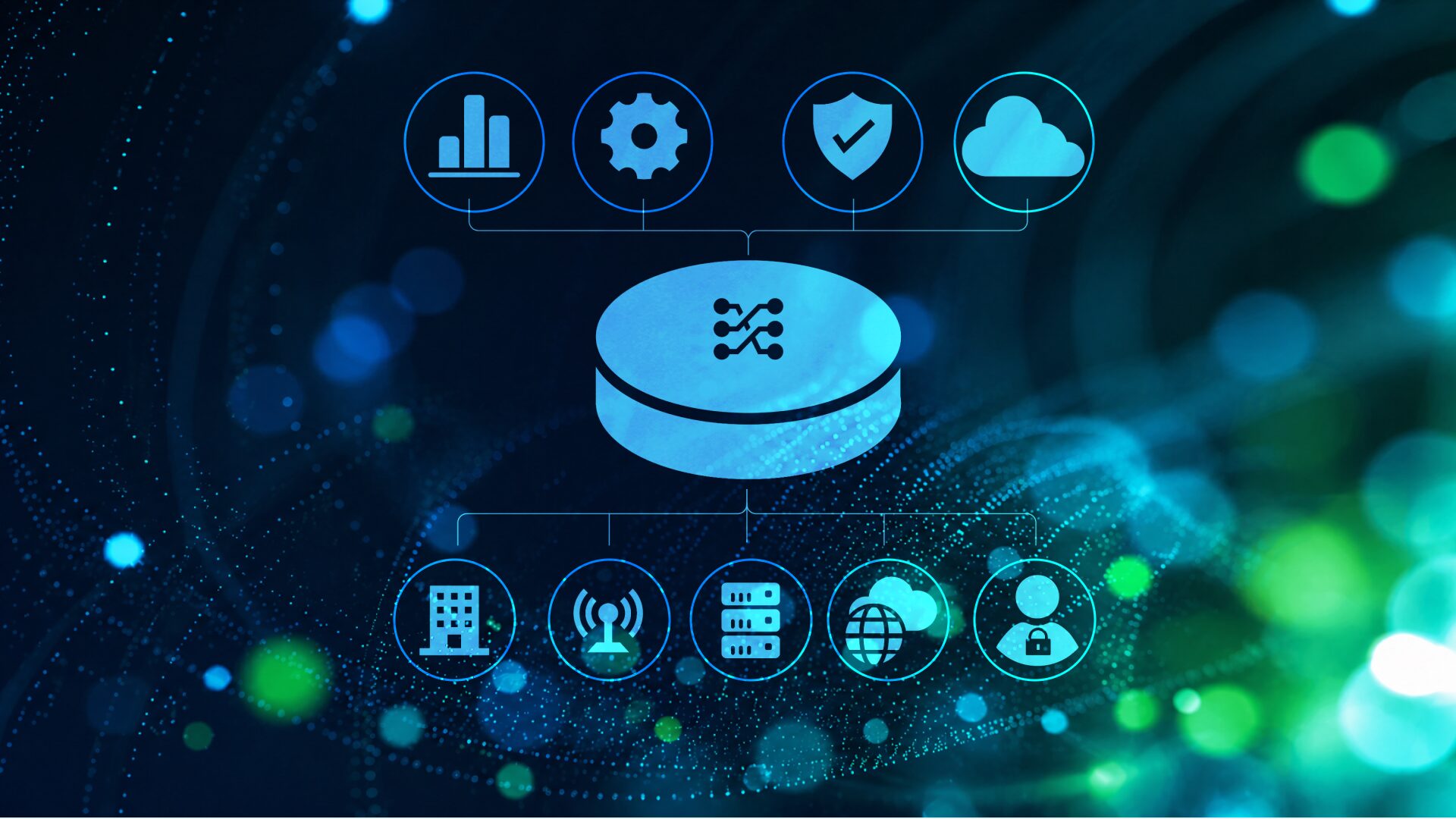
Network Infrastructure as a Service (NIaaS) is a cloud-delivered network fabric consumed on demand. Instead of building and maintaining hubs, overlays, and backbone capacity, enterprises define segmentation and connectivity intent, and the service delivers secure, deterministic connectivity across clouds, data centers, and distributed locations.
Problem: Traditional Modern Bring Modern UI, Yet Places Same Operating Burden
Over the past decade, networking vendors have invested heavily in abstraction layers—controllers, overlays, templates, automation frameworks. These help, but they do not change the fundamental reality:
- You still own the infrastructure
- You still design the topology
- You still integrate security
- You still scale, patch, and troubleshoot
- You still carry refresh cycles and capacity risk
These newer services/products may help automate/orchestrate the network better, but do not remove the complexity of the network. It simply moves the burden from CLI to controller—while preserving the same architectural fragility underneath.
What NIaaS actually replaces
NIaaS is not defined by APIs or dashboards. It is defined by what the enterprise no longer has to do.
A true NIaaS model removes entire categories of responsibility:
- No physical hubs to build or refresh
- No capacity forecasting for backbone links
- No manual stitching of clouds, regions, and partners
- No fragmented policy enforcement across domains
- No dependency on colocation gravity
Instead of constructing a network, the enterprise consumes a global fabric—elastic, policy-driven, and available where workloads run.
This is the same shift that cloud brought to compute and storage. The value is not “better control,” but freedom from control.
The non-negotiable characteristics of NIaaS
A practical way to evaluate NIaaS is to test whether the model is fabric-based and policy-first. A true NIaaS offering should meet 4 key criteria:
1. Fabric-native, not hub-centric
The network should behave as a unified fabric, not as customer-owned hubs connected by tunnels. If the enterprise must build and manage hubs as the core architecture, the operating model has not changed.
2. Cloud-delivered by design
The provider owns and operates the infrastructure. The enterprise consumes the network infrastructure as a cloud service, decoupled from hardware lifecycles and refresh planning.
3. Policy-first architecture
Segmentation, governance, and security controls are intrinsic to the fabric. They are not layered on inconsistently through separate products, separate consoles, or per-domain workarounds.
4. Operational simplicity at scale
Day-2 operations should not get exponentially complex as the network grows. Public cloud, private environments, partner networks, and edge sites are treated as equal endpoints. They are not “special cases” that require bespoke integration work.
If any of these are missing, the enterprise has likely adopted orchestration—not NIaaS.
Why AI makes the distinction unavoidable
AI workloads expose architectural truth. They stress networks in ways that dashboards cannot mask:
- Bursty, unpredictable traffic
- Latency sensitivity across regions, datacenters, and clouds
- Massive data movement between compute and storage
- Hybrid placement driven by cost, regulation, and performance
In that environment, infrastructure ownership becomes a constraint.
Every scale decision becomes a project. Every policy update touches multiple domains. Every regional expansion adds operational overhead and risk.
AI rewards networks that are elastic by default and governed centrally, not networks that require continuous rebuilds to keep pace with change.
This is why NIaaS is no longer only a cost or operational discussion. It is increasingly an AI-readiness requirement.
Where Alkira fits
Alkira was built around this NIaaS operating model: a cloud-delivered global network fabric consumed as a service, with centralized policy and segmentation across clouds, regions, and distributed environments.
Read Part 3: “The New Network Operating Model: Security From Day 0”
FAQs
Further reading (internal links)
“A New Operating Model” Blog Series
- Part 1: The New Network Operating Model: Modernizing Beyond Colocation Hubs
- Part 2: The New Network Operating Model: Network Infrastructure-as-a-Service
- Part 3: The New Network Operating Model: Security From Day 0
- Part 4: The New Network Operating Model: Operational Simplicity Is the Scaling Constraint
- Part 5: The New Network Operating Model: Economic Alignment for AI-Era Networking
- Part 6: The New Network Operating Model: The Modernization Strategy That Reduces Risk
- Part 7: The New Network Operating Model: Network Modernization Use Cases
- Part 8: The New Network Operating Model: Measuring Network Modernization
- Part 9: The New Network Operating Model: The Objections That Stall Modernization
- Part 10: The New Network Operating Model: The Path Forward
Technical “Building A New Operating Model” Blog Series
- Technical Blog Part 1: “Building A New Operating Model: The Architectural Evolution of an Enterprise RAG System”

Calvin Nguyen