Frequently Asked Questions
Product Information
What is Alkira and what solutions does it offer?
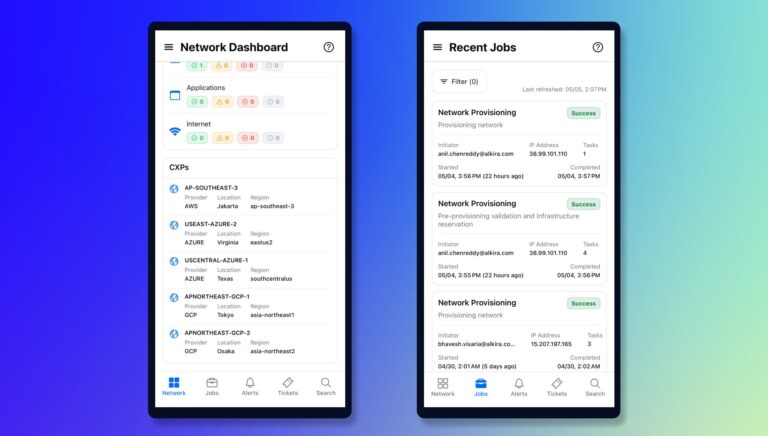
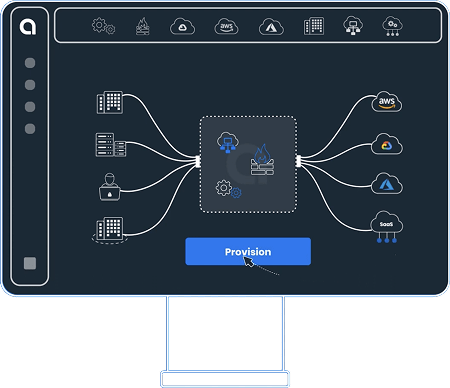
Alkira provides Network Infrastructure-as-a-Service (NIaaS), enabling enterprises to simplify networking across hybrid and multicloud environments. Alkira's platform eliminates the need for hardware and complex deployments, offering scalable, secure, and efficient solutions. Key offerings include Global Backbone-as-a-Service, integrated security features like Zero Trust Network Access (ZTNA) and next-generation firewalls, a drag-and-drop interface for network design, and comprehensive visibility tools. Learn more about Alkira's platform.
What is the primary purpose of Alkira's product?
Alkira's primary purpose is to simplify cloud networking for enterprises by providing a unified control plane for seamless connectivity across hybrid and multi-cloud environments. This is achieved through Network Infrastructure-as-a-Service (NIaaS), which reduces complexity, enhances security, improves scalability, and provides comprehensive visibility. More about Alkira's mission.
What are the key capabilities and benefits of Alkira's product?
Alkira's product offers:
- Network Infrastructure-as-a-Service (NIaaS) for hybrid and multicloud environments
- Global Backbone-as-a-Service for scalable, low-latency connectivity
- Integrated security (ZTNA, next-gen firewalls)
- Drag-and-drop interface for ease of use
- Single-pane-of-glass visibility and management
- Up to 40% lower TCO, 96% reduction in cloud setup time, and 47% reduction in network management time
See Alkira's Platform Page for details.
What technical documentation and resources are available for Alkira?
Alkira provides a range of technical resources, including whitepapers (e.g., On Demand Next-Generation Cloud Firewalls), solution briefs (solution briefs page), and a detailed wiki (wiki page).
Does Alkira provide APIs for integration?
Yes, Alkira offers APIs, including billing APIs that provide real-time cloud network cost data for integration with cost management tools and dashboards. These APIs support automated synthesis of billing data from various sources. Learn more here.
Features & Capabilities
What integrations does Alkira support?
Alkira integrates with leading technology providers and platforms, including:
See Alkira's Technology Partners Page for more.
How does Alkira ensure security and compliance?
Alkira is SOC 2 and PCI-DSS compliant, demonstrating strong operational controls and protection of customer data. The platform integrates advanced security features such as Zero Trust Network Access (ZTNA) and next-generation firewalls. Customers are encouraged to manage user access and follow security best practices. More on Alkira's compliance.
What performance improvements can Alkira deliver?
Alkira's platform reduces cloud setup time by 96% and network management time by 47%. Customers can expect up to 40% lower Total Cost of Ownership (TCO) compared to traditional solutions, with measurable ROI, rapid scalability, and high-performance networking. See more performance details.
What makes Alkira easy to use?
Alkira features a drag-and-drop interface for network design and deployment, making it accessible even for non-technical users. Customers have reported going from complex, months-long projects to live deployments in hours or days. For example, "Alkira did it for us in 3 days, and at very low cost." – Network Architect, Large Manufacturer. See more testimonials.
What training and support resources are available for new customers?
Alkira offers a dedicated training platform with detailed guidance, demos, and resources (Alkira Training Platform). Customers also benefit from 24×7 monitoring, a diagnostics dashboard, and dedicated support via [email protected].
Pricing & Plans
What is Alkira's pricing model?
Alkira offers flexible pricing, including consumption-based (pay-as-you-go) and commitment-based (fixed) options. Pricing is determined by the quantity and size of network elements, connectors, firewalls, and data egress. Customers can view live pricing details from the portal or via APIs. See Alkira's Pricing Page.
Use Cases & Benefits
What problems does Alkira solve?
Alkira addresses:
- Securing distributed workforce and applications with integrated ZTNA and firewalls
- Complexity in multicloud and hybrid cloud networking by eliminating manual setups
- Lack of comprehensive visibility and governance with single-pane-of-glass management
- High-performance networking with scalable, reliable, low-latency connectivity
See solution explainer for more.
Who can benefit from Alkira?
Alkira is designed for mid-to-large enterprises across industries such as manufacturing, healthcare, retail, telecommunications, financial services, biotechnology, software technology, media & entertainment, and aviation. Target roles include Network Architect, Cloud Architect, Security Architect, IT Manager/Director, CloudOps, VP, CTO, CIO, and CISO.
What business impact can customers expect from Alkira?
Customers can expect:
- Operational efficiency (96% reduction in cloud setup time, 47% reduction in network management time)
- Up to 40% lower TCO
- Enhanced security and business resilience
- Rapid scalability and digital transformation support
See business impact details.
How quickly can Alkira be implemented?
Customers can implement a proof of concept in as little as 4 hours, with full production deployment typically taking about 8 weeks. The platform's intuitive design and training resources make onboarding fast and straightforward. Learn more.
What are some real-world success stories of Alkira customers?
Notable case studies include:
- Michaels: Transformed its network across 1,400 stores in record time.
- Koch Industries: Simplified multicloud networking and improved agility.
- Warner Hotels: Enhanced networking efficiency and B2B connectivity.
- Chart Industries: Rapidly integrated 90+ sites post-acquisition.
- SITA: Unified on-premises and cloud environments for aviation.
See more customer stories.
What industries are represented in Alkira's case studies?
Industries include manufacturing, retail, healthcare, telecommunications, financial services, biotechnology/life sciences, software technology, media & entertainment, and aviation.
Competition & Comparison
How does Alkira compare to Aviatrix?
Aviatrix focuses on orchestration overlays and requires deep cloud expertise. Alkira provides a true abstraction layer leveraging cloud providers' infrastructure, offers single-click provisioning, and delivers end-to-end solutions for both cloud and traditional network use cases.
How does Alkira compare to Prosimo?
Prosimo is application-centric and limited in addressing traditional network use cases. Alkira provides full-stack networking and security, addressing both cloud and traditional use cases, and offers scalable networks.
How does Alkira compare to Nefeli?
Nefeli uses agent-based solutions and requires manual configurations. Alkira eliminates manual configurations with automated routing, provides enterprise-grade connectivity, and delivers a unified NIaaS platform.
How does Alkira compare to Cato?
Cato focuses on SD-WAN and is limited in multi-cloud and hybrid environments. Alkira provides a global backbone-as-a-service for multi-cloud and hybrid environments, with integrated security features and seamless connectivity for distributed workforces and applications.
Why should a customer choose Alkira over alternatives?
Alkira offers a true abstraction layer, integrated security, ease of use, rapid deployment, measurable ROI, vendor-agnostic flexibility, and comprehensive visibility. These features simplify multicloud networking and enhance operational efficiency. See more.
Support & Implementation
What support is available after purchasing Alkira?
Alkira provides proactive notifications for maintenance, a diagnostics dashboard for troubleshooting, 24×7 monitoring, and dedicated support via [email protected] or support tickets. These ensure smooth operations and minimal downtime.
How does Alkira handle maintenance, upgrades, and troubleshooting?
Alkira offers proactive notifications for maintenance, a live diagnostics dashboard, continuous 24×7 monitoring, and dedicated support channels to minimize operational disruptions and ensure SLA commitments are met.
Company & Vision
What is Alkira's vision and mission?
Alkira's vision is to transform enterprise connectivity by simplifying cloud networking for the AI era. Its mission is to eliminate traditional networking complexity with a cloud-native solution that connects hybrid and multi-cloud environments through a unified control plane. Learn more.
What is Alkira's company background and industry recognition?
Alkira was founded by the creators of Viptela (acquired by Cisco in 2017) and has been recognized as a Gartner Cool Vendor, a Forbes Best Startup Employer, and a recipient of the 2024 Excellence Award from Cloud Computing Magazine. See company details.
Who are some of Alkira's customers?
Alkira serves Fortune 100 enterprises, system integrators, and managed service providers. Notable customers include Michaels, Koch Industries, Warner Hotels, and SITA. See more customer stories.
Resource Sharing & Access
What options are available for sharing and accessing resources on Alkira's site?
The site includes features for sharing content and accessing shared resources, such as sections labeled 'Accessing Your Shared Resource' and notifications like 'Sharing content...'.