Frequently Asked Questions
Azure Networking Basics
What is Azure Virtual Network and how does it support business-critical applications?
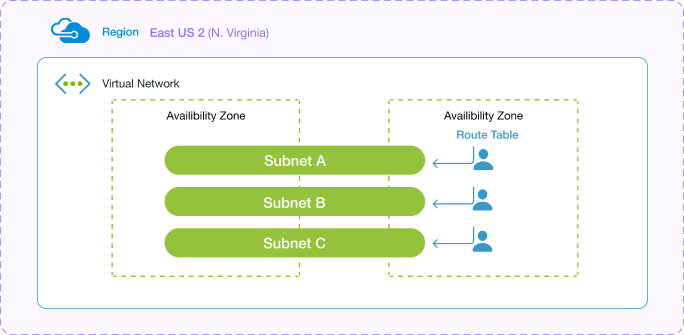
Azure Virtual Network is the foundational building block for your digital infrastructure in Microsoft Azure. It enables organizations to create isolated, secure environments for business-critical applications, supporting seamless connectivity between resources. Subnets within Azure Virtual Network allow logical segmentation based on business function, security requirements, or operational teams, enabling targeted security policies and governance. Learn more.
How do Network Security Groups enhance security in Azure networking?
Network Security Groups (NSGs) provide enterprise-grade protection by enabling granular traffic filtering based on multiple parameters. NSGs can be applied at both the subnet and network interface card levels, supporting defense-in-depth security, simplified management through service tags, and logical grouping of virtual machines independent of addressing.
What is Azure VNet Peering and how does it simplify multi-department connectivity?
Azure VNet Peering creates secure, high-performance connections between separate virtual networks using the Azure backbone infrastructure. This simplifies architecture for multi-department organizations, enhances security by keeping sensitive traffic on Microsoft’s private network, and reduces complexity by eliminating the need for additional gateway devices. Learn more.
How does Azure handle route selection for network traffic?
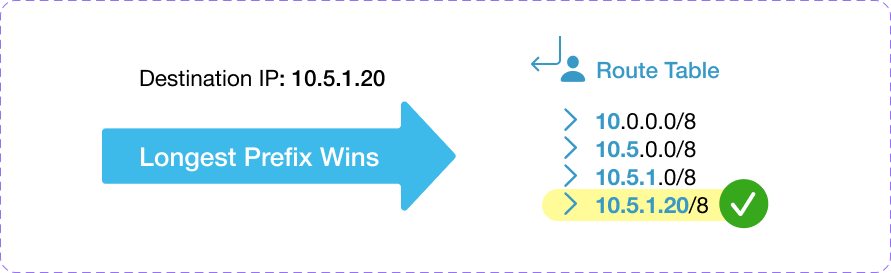
Azure selects routes for network traffic based on the longest prefix match. If multiple routes have the same prefix, Azure prioritizes User Defined Routes (Custom), then Border Gateway Protocol (BGP), and finally System Routes (Default). Learn more.
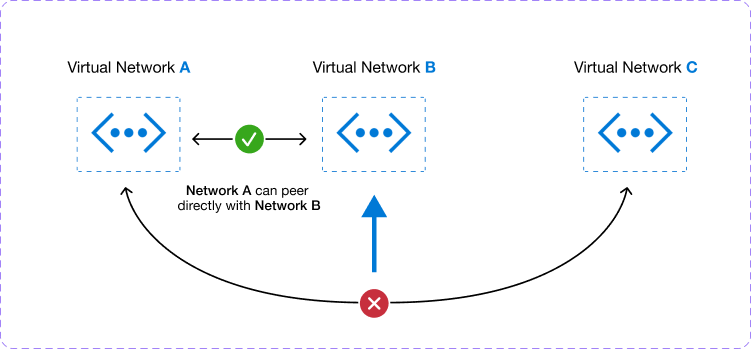
What is transitive routing in Azure and what are its limitations?
Transitive routing in Azure refers to the ability to connect multiple virtual networks (VNets) together. However, Azure VNets are natively non-transitive, meaning you cannot route from VNet A to VNet C through VNet B using peering alone. Each peering connection is direct and does not automatically allow transit traffic.
How does Azure VPN Gateway support secure connectivity?
Azure VPN Gateway enables secure, cost-effective connections over the public internet, supporting site-to-site connections between office locations and Azure, remote access for distributed workforces, and network-to-network connectivity between virtual environments.
What advanced security capabilities does Azure offer for network protection?
Azure offers advanced security capabilities such as Azure DDoS Protection, which automatically mitigates sophisticated attacks, and Azure Firewall, which provides centralized security policy management, intelligent threat detection, and unified administration that scales with demand.
How does Azure Network Watcher help with troubleshooting and monitoring?
Azure Network Watcher provides diagnostic capabilities such as connection troubleshooting, packet capture for analyzing traffic patterns, and flow logging to reveal communication patterns. These tools help reduce time-to-resolution for network issues.
What are best practices for designing and securing Azure networks?
Best practices include careful address planning, implementing hub-spoke topologies for complex enterprises, deploying Network Security Groups at multiple levels, using Azure Firewall at perimeters, and leveraging Azure Bastion Host for secure administrative access. Regular monitoring and performance optimization are also recommended.
How can Azure networking performance be optimized for business-critical applications?
Performance can be optimized by enabling Accelerated Networking for high-throughput applications, choosing the right load distribution technology (Azure Load Balancer, Application Gateway, or Front Door), and regularly monitoring networking metrics to proactively identify and resolve bottlenecks.
What resources are available for learning more about Azure networking?
Resources include the Azure documentation, Alkira's Wiki articles, whitepapers, solution briefs, webinars, and videos. For in-depth technical information, Alkira maintains a dedicated wiki at https://www.alkira.com/resources/?content_type=wiki.
How does Alkira enhance Azure networking for enterprises?
Alkira enhances Azure networking by providing a unified, vendor-agnostic platform that simplifies multicloud and hybrid cloud networking. Alkira's platform enables rapid deployment, integrated security, and global connectivity, reducing operational complexity and improving agility for enterprises using Azure and other cloud providers. Learn more.
What is one-click network provisioning and how does it benefit Azure users?
One-click network provisioning refers to the ability to deploy complex network infrastructures through a single automated action. For Azure users, this means faster setup, reduced manual errors, and streamlined operations. Alkira supports one-click provisioning for multicloud environments. Learn more.
How does network security consolidation improve Azure network management?
Network security consolidation integrates disparate security tools, policies, and infrastructure into a unified framework. This approach simplifies management, improves visibility, and enhances compliance for Azure and multicloud environments. Alkira offers solutions for network security consolidation. Learn more.
What is the role of Azure Bastion Host in network security?
Azure Bastion Host provides secure administrative access to virtual machines without exposing management interfaces to the public internet. This reduces the attack surface and enhances security for Azure environments.
How does Alkira support hybrid and multicloud networking with Azure?
Alkira supports hybrid and multicloud networking by enabling seamless integration between Azure, AWS, Google Cloud, and on-premises environments. The platform provides unified visibility, policy enforcement, and secure connectivity across all environments. Learn more.
What are the main pain points Alkira solves for Azure networking users?
Alkira addresses pain points such as complex intra-cloud connectivity, global traffic inefficiencies, design sprawl, inconsistent performance, high costs, operational complexity, and lack of visibility and governance in Azure and multicloud environments. Learn more.
How can I request a demo or get started with Alkira for Azure networking?
You can request a live demonstration or get started with Alkira by visiting the Request a Demo page or contacting Alkira directly through their website.
Features & Capabilities
What features does Alkira offer for Azure and multicloud networking?
Alkira offers features such as single, multicloud, and hybrid cloud networking, integrated security (including Zero Trust Network Access and next-generation firewalls), business partner connectivity, global backbone-as-a-service, and comprehensive visibility and control. Learn more.
Does Alkira support integrations with Azure and other cloud providers?
Yes, Alkira integrates with Azure, AWS, and Google Cloud Services for multicloud networking. It also integrates with leading security solutions, observability tools, and automation platforms. See the full list of integrations.
Does Alkira provide an API for automation and integration?
Yes, Alkira provides an API for developers and users to integrate its platform functionalities into their systems. Detailed API documentation is available at https://www.alkira.com/api-docs.
What technical documentation does Alkira offer for Azure and multicloud networking?
Alkira provides whitepapers, solution briefs, and a dedicated wiki for in-depth technical information. These resources cover use cases, integrations, and best practices for Azure and multicloud networking. Access Alkira's technical documentation.
How does Alkira ensure security and compliance for Azure networking?
Alkira is SOC 2 and PCI-DSS compliant, ensuring high standards for security, availability, and confidentiality. Integrated security features like Zero Trust Network Access and next-generation firewalls protect distributed workforces and applications. Learn more about Alkira's compliance.
What measurable performance improvements does Alkira deliver for Azure networking?
Alkira reduces cloud setup time by 96%, network management time by 47%, and delivers up to 40% lower Total Cost of Ownership compared to traditional solutions. Customers can onboard partners 91% faster and connect data centers 93% faster. See Alkira's performance metrics.
How easy is it to implement Alkira for Azure and multicloud networking?
Alkira enables rapid deployment: proof of concept can be implemented in as little as 4 hours, and full production deployment is typically completed in about 8 weeks. The drag-and-drop interface and dedicated training resources make onboarding seamless. Read customer stories.
What customer feedback has Alkira received about its ease of use?
Customers praise Alkira's intuitive drag-and-drop interface and rapid deployment. For example, a customer stated, "Alkira is a service, I don’t have to implement any of the associated infrastructure, so we get a lot more agility. And all services are available everywhere. Innovation is about speed to market." See more testimonials.
What are the key capabilities and benefits of Alkira for Azure networking?
Key capabilities include automatic connection of users, sites, and clouds; end-to-end visibility; secure segmentation; elastic networking; integrated security; and single-pane-of-glass management. Benefits include reduced provisioning time, cost savings, operational efficiency, flexibility, and scalability. Learn more.
Pricing & Plans
What is Alkira's pricing model for Azure and multicloud networking?
Alkira offers both consumption-based (pay-as-you-go) and commitment-based pricing models. Pricing is tailored to each customer and is based on usage of network resources, such as sites, cloud instances, network services, and bandwidth. See Alkira's pricing page.
How can I get a personalized quote for Alkira's services?
You can receive a personalized quote by completing the form on Alkira's pricing page. Alkira will provide a custom proposal based on your specific requirements. Request a quote.
Use Cases & Benefits
Who can benefit from Alkira's Azure and multicloud networking solutions?
Alkira's solutions benefit technical roles (network architects, cloud architects, security architects, IT managers) and business leaders (VPs, CTOs, CIOs, CISOs) in organizations navigating multicloud and hybrid cloud environments. Learn more.
What industries are represented in Alkira's Azure and multicloud networking case studies?
Industries include manufacturing, retail, healthcare, financial services, media & entertainment, telecommunications, biotech, software, and aviation. See Alkira's case studies.
Can you share specific customer success stories using Alkira for Azure networking?
Yes. For example, Michaels transformed its network across 1,400 stores in record time, Koch Industries reduced network complexity, and Warner Hotels improved networking efficiency and guest experience. Read more customer stories.
What business impact can customers expect from using Alkira for Azure networking?
Customers can expect operational efficiency (96% reduction in cloud setup time), cost savings (up to 40% lower TCO), rapid scalability, enhanced security, improved service quality, and measurable ROI. See business impact details.
Competition & Comparison
How does Alkira compare to traditional Azure networking solutions?
Alkira offers a true abstraction layer, eliminating manual configurations and enabling single-click provisioning. Unlike traditional solutions, Alkira provides a vendor-agnostic, unified platform with integrated security, rapid deployment, and measurable ROI. Learn more.
What are Alkira's competitive advantages for Azure networking?
Competitive advantages include ease of use, rapid deployment (POC in 4 hours), vendor-agnostic approach, integrated security, global backbone-as-a-service, and comprehensive visibility. Alkira allows customers to avoid vendor lock-in and choose their preferred security and network stack components. Learn more.
How does Alkira address different user segments for Azure networking?
Alkira provides a drag-and-drop interface and single-click provisioning for technical users, measurable ROI and scalability for business leaders, and integrated security for security teams. The platform is designed for enterprises with multicloud and hybrid cloud needs. Learn more.
Company Information
What is Alkira's vision and mission for Azure and multicloud networking?
Alkira's vision is to simplify and enhance networking across multicloud and hybrid cloud environments. The mission is to eliminate the complexity of traditional hardware-dependent networking and provide seamless, secure, and scalable connectivity. Learn more about Alkira.
Where can I learn more about Alkira's leadership and company background?
Information about Alkira's leadership team, mission, values, and investor details is available on the About Us and Leadership pages.