Alkira is a Network Infrastructure-as-a-Service (NIaaS) platform designed to simplify enterprise networking, especially for hybrid and multicloud environments. It provides on-demand network infrastructure, global backbone-as-a-service, integrated security features like Zero Trust Network Access (ZTNA) and next-generation firewalls, a drag-and-drop interface for network design, and single-pane-of-glass management tools. Alkira eliminates the need for hardware and complex deployments, enabling rapid, secure, and scalable connectivity for modern workloads, including AI-specific clouds. Learn more.
How does Alkira enable seamless integration of multicloud networks into AI-specific clouds?
Alkira enables seamless integration by providing a unified, on-demand networking solution that connects on-premises, public clouds, and AI-specific clouds through its global Cloud Exchange Points (CXPs). This approach eliminates manual configurations, hardware dependencies, and lengthy setup times, allowing organizations to rapidly connect and scale their networks to support AI workloads such as machine learning, generative AI, and high-performance computing. Read more.
What is the primary purpose of Alkira's product?
The primary purpose of Alkira's product is to simplify cloud networking for enterprises by offering Network Infrastructure-as-a-Service (NIaaS). This eliminates traditional hardware-dependent networking and provides a unified control plane for seamless, secure connectivity across hybrid and multi-cloud environments, supporting digital transformation and AI adoption. More details.
Features & Capabilities
What are the key features and benefits of Alkira?
Key features and benefits of Alkira include:
Network Infrastructure-as-a-Service (NIaaS) for hybrid/multicloud environments
Global Backbone-as-a-Service for scalable, low-latency connectivity
Up to 40% lower TCO compared to traditional solutions
96% reduction in cloud setup time and 47% reduction in network management time
These features help enterprises accelerate deployment, reduce costs, and maintain security and control. Learn more.
Does Alkira support integrations with other technology providers?
Yes, Alkira integrates with leading technology providers and platforms, including Cisco SD-WAN, Palo Alto Networks, Fortinet NGFW, F5, Splunk, ServiceNow, Infoblox, Aruba SD-WAN, Terraform, and Itential Automation Platform. These integrations enable secure, scalable, and automated networking across diverse environments. See all integrations.
Does Alkira provide APIs for integration and automation?
Yes, Alkira offers APIs, including billing APIs that provide real-time cloud network cost data. These APIs can be integrated with cost management tools and dashboards, supporting automated monitoring and optimization of cloud costs. More info.
What technical documentation and resources are available for Alkira?
Alkira provides comprehensive technical documentation, including whitepapers (e.g., On Demand Next-Generation Cloud Firewalls), solution briefs, and a dedicated wiki. These resources offer in-depth technical insights and guidance for evaluating and implementing Alkira solutions. Solution Briefs | Wiki
Pricing & Plans
What is Alkira's pricing model and how is it determined?
Alkira offers flexible pricing models:
Consumption-Based Pricing: Pay-as-you-go based on actual usage of network elements, services, and traffic.
Commitment-Based Pricing: Fixed pricing for predictable budgeting.
Pricing is determined by the quantity and size of network elements (e.g., Cloud Exchange Points), connectors, firewalls, and data egress. Customers can view live pricing details via the portal or APIs. See pricing details.
Use Cases & Benefits
What problems does Alkira solve for enterprises?
Alkira addresses several core challenges:
Operational complexity in hybrid/multicloud networking
Security vulnerabilities in traditional VPNs and perimeter-based models
Scalability and performance limitations of legacy solutions
Lack of comprehensive visibility and governance
Alkira simplifies networking, enhances security, enables rapid scaling, and provides unified management tools, supporting digital transformation and AI adoption. Learn more.
How does Alkira help organizations unlock the potential of AI clouds?
Alkira enables seamless network integration with specialized AI clouds, ensuring efficient, secure, and scalable connectivity for machine learning, generative AI, and high-performance computing workloads. This helps organizations overcome integration challenges and maximize the value of AI investments. Read the blog.
What are some real-world use cases for Alkira in AI cloud integration?
Alkira supports a variety of AI cloud use cases, including:
AI-driven enterprise adoption: Rapidly connecting data lakes, on-premises systems, and AI clouds for model development
Healthcare AI for drug discovery: Integrating research data, compute resources, and collaboration tools securely
Media and entertainment rendering: High-throughput networking for real-time animation rendering and large data transfers
Financial services risk modeling: Secure, low-latency connections for real-time risk analysis and compliance
These use cases demonstrate Alkira's ability to accelerate innovation and simplify complex networking challenges. See more.
What business impact can customers expect from using Alkira?
Customers can expect:
96% reduction in cloud setup time
47% reduction in network management time
Up to 40% lower total cost of ownership (TCO)
Enhanced security and business resilience
Rapid scalability and improved operational efficiency
These outcomes are supported by customer testimonials and case studies. More info.
Who can benefit from Alkira's solutions?
Alkira is designed for mid-to-large enterprises across industries such as manufacturing, healthcare, telecommunications, financial services, biotechnology, software technology, media & entertainment, and aviation. Target roles include network architects, cloud architects, security architects, IT managers/directors, CloudOps, CIOs, CTOs, and CISOs. See customer stories.
What are some customer success stories with Alkira?
Notable customer success stories include:
Michaels: Transformed its network across 1,400 stores in record time. Read case study
Koch Industries: Simplified multicloud networking and improved agility. Watch video
Warner Hotels: Enhanced networking efficiency and B2B connectivity. Watch video
Chart Industries: Improved agility, saved costs, and expanded globally. Watch video
SITA: Integrated on-premises and cloud environments for aviation. Watch video
Up to 40% lower TCO compared to traditional solutions
Automatic scalability to match bandwidth demand
Integrated security for distributed workforces and applications
These metrics are based on customer feedback and operational data. Learn more.
Security & Compliance
How does Alkira ensure security and compliance?
Alkira is SOC 2 and PCI-DSS compliant, demonstrating its commitment to securing customer data and maintaining robust operational controls. The platform integrates advanced security features such as Zero Trust Network Access (ZTNA) and next-generation firewalls, and encourages customers to follow best practices for user access management. See compliance details.
Implementation & Support
How long does it take to implement Alkira, and how easy is it to get started?
Customers can implement a proof of concept in as little as 4 hours, with full production deployment typically taking about 8 weeks. Alkira's drag-and-drop interface, dedicated training platform, and 24×7 monitoring make onboarding straightforward, even for teams without extensive technical expertise. Explore training resources.
What training and technical support does Alkira provide?
Alkira offers a dedicated training platform with detailed guidance, demos, and resources. Customers benefit from 24×7 monitoring, a diagnostics dashboard for troubleshooting, and dedicated support via email or support tickets. Training Platform
How does Alkira handle maintenance, upgrades, and troubleshooting?
Alkira provides proactive notifications for maintenance, a live diagnostics dashboard for troubleshooting, 24×7 monitoring to meet SLA commitments, and dedicated support for issue resolution. Customers can contact support at [email protected] or open a support ticket.
Competition & Comparison
How does Alkira compare to Aviatrix?
Aviatrix focuses on orchestration overlays and requires deep cloud expertise for deployment. Alkira provides a true abstraction layer leveraging cloud providers' infrastructure, offers single-click provisioning without deep cloud expertise, and delivers end-to-end solutions for both cloud and traditional network use cases.
How does Alkira compare to Prosimo?
Prosimo is application-centric and limited in addressing traditional network use cases. Alkira provides full-stack networking and security, addresses both cloud and traditional network use cases, and offers horizontally and vertically scalable networks.
How does Alkira compare to Nefeli?
Nefeli uses agent-based solutions and requires manual configurations. Alkira eliminates manual configurations with automated routing, provides enterprise-grade connectivity for cloud and AI-based applications, and delivers a unified platform for network infrastructure as-a-service.
How does Alkira compare to Cato?
Cato focuses on SD-WAN and is limited in multi-cloud and hybrid environments. Alkira provides a global backbone-as-a-service for multi-cloud and hybrid environments, offers integrated security features like ZTNA, and supports seamless connectivity for distributed workforces and applications.
Why should a customer choose Alkira over alternatives?
These differentiators make Alkira a leader in simplifying multicloud networking. Learn more.
Customer Feedback
What do customers say about Alkira's ease of use?
Customers consistently praise Alkira for its intuitive platform and rapid deployment:
"The IT DIY approach was going to take 6 months to be secure and redundant and all. Alkira did it for us in 3 days, and at very low cost." – Network Architect, Large Manufacturer
"We met with Alkira, and after about an hour of us explaining what we needed, we created a POC – and stood that up in a morning. Design-to-POC-setup in about 4 hours." – Sr. Director, Network Architect, Financial Company
"We had gone from a mass of complexity and months of work to a dashboard that allowed us simply to draw our network and deploy it in a few hours." – Matt Hoag, CTO at Koch Industries
Which industries are represented in Alkira's case studies?
Industries include manufacturing, retail, healthcare, telecommunications, financial services, biotechnology/life sciences, software technology, media & entertainment, and aviation. Explore case studies.
Company Information
What should customers know about Alkira as a company?
Alkira was founded by the creators of Viptela (acquired by Cisco in 2017) and is recognized for innovation in cloud networking. It has been named a Gartner Cool Vendor, received the 2024 Excellence Award from Cloud Computing Magazine, and is listed on CRN’s 2023 Stellar Startups List. Alkira serves Fortune 100 enterprises, system integrators, and global managed service providers. Learn more about Alkira.
What is Alkira's vision and mission?
Alkira's vision is to transform enterprise connectivity by simplifying cloud networking for the AI era. Its mission is to eliminate the complexity of traditional networking by providing a cloud-native solution that seamlessly connects hybrid and multi-cloud environments through a unified control plane. More about Alkira's mission.
The rise of AI-driven workloads—spanning machine learning, generative models, and high-performance computing (HPC)—has fueled demand for specialized AI clouds optimized for GPU-intensive tasks. However, integrating these platforms into existing hybrid multi-cloud architectures poses significant challenges for enterprises. From on-premises systems to public clouds, organizations need a networking solution that ensures seamless connectivity to AI clouds without sacrificing performance or security. Alkira’s Network Infrastructure-as-a-Service (NIaaS) platform addresses this @need, enabling businesses to extend their hybrid multi-cloud networks into AI clouds with agility, security, simplicity, and scale. This blog explores the key benefits of using Alkira to unlock the full potential of AI cloud adoption.
The Challenge of Hybrid Multicloud Networking with AI Clouds
AI clouds offer unparalleled compute power, high-speed networking, and managed services tailored for advanced workloads. Yet, enterprises face hurdles when connecting these environments to their broader infrastructure:
Complexity: Traditional networking requires manual setup of VPNs, private interconnects, or SD-WAN overlays, delaying deployment and increasing operational overhead.
Security: Maintaining consistent policies across on-premises, public clouds, and AI clouds while protecting sensitive data is critical yet challenging.
Scalability: AI workloads often require rapid scaling, demanding networks that adapt without bottlenecks or latency.
Management: Disparate tools across environments hinder visibility and control, complicating operations and troubleshooting.
Alkira’s Network Infrastructure as a Service platform overcomes these obstacles, delivering a unified, on-demand networking solution for AI cloud integration.
Benefits of Using Alkira for AI Cloud Integration
1. Agility: Rapid Deployment and Adaptability
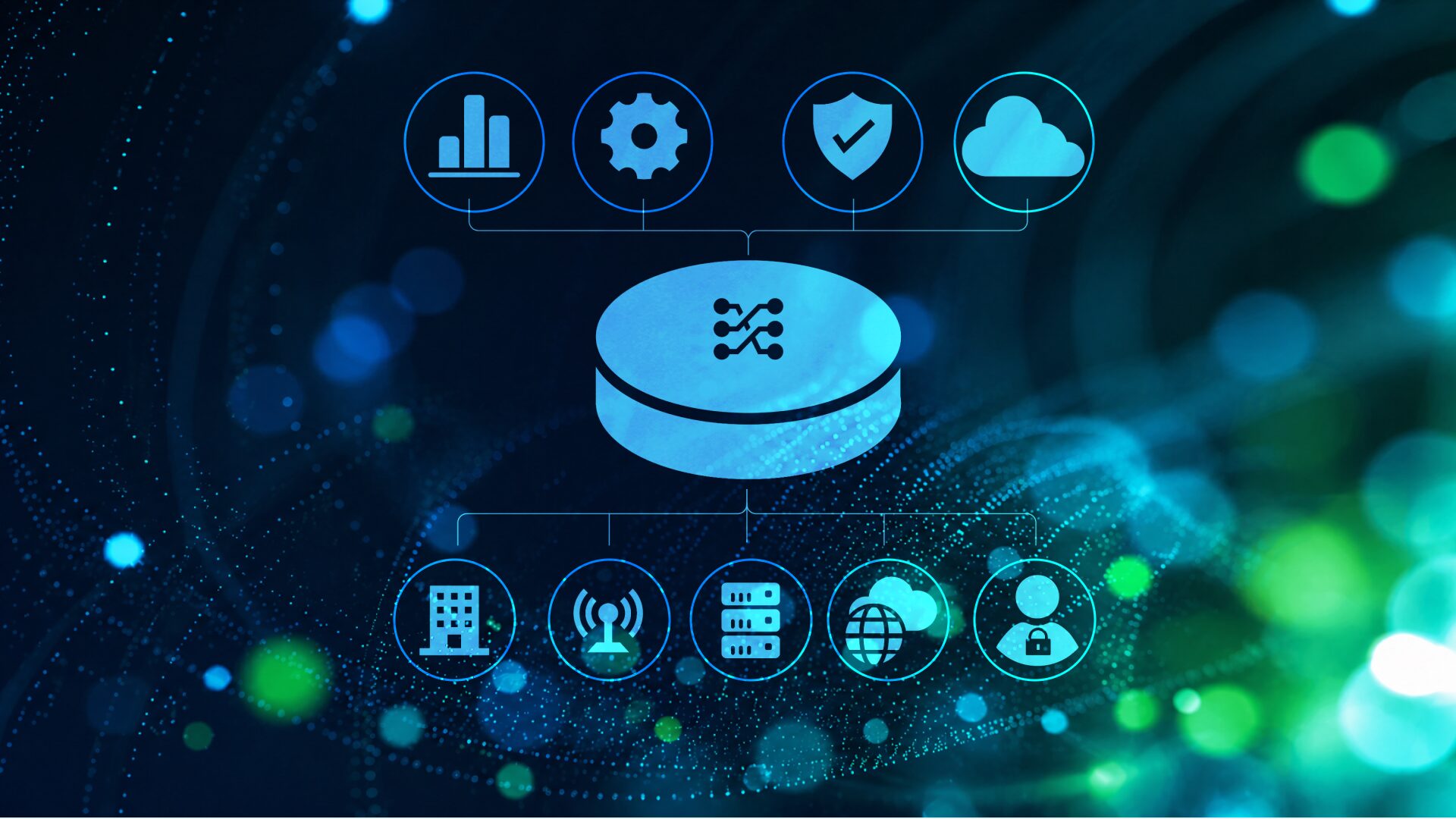
Alkira enables organizations to connect their hybrid multicloud networks to AI clouds in minutes. Its intuitive, point-and-click interface allows network architects to design and provision connectivity on a digital canvas, linking on-premises data centers, public clouds (e.g., AWS, Azure, GCP), and AI cloud providers via Alkira’s global Cloud Exchange Points (CXPs). This eliminates hardware dependencies, manual configurations, and lengthy setup times. For AI-driven businesses, this agility accelerates deployment of compute-intensive workloads, keeping pace with innovation cycles.
2. Security: Built-In Protection Across Environments
Security is a top priority when extending networks to AI clouds, particularly for applications handling proprietary models or sensitive data. Alkira offers end-to-end encryption, advanced segmentation, and Zero Trust Network Access (ZTNA) natively within its platform. Integration with leading security vendors—such as Check Point, Cisco, Fortinet, and Palo Alto Networks—enables customers to deploy next-generation firewalls that auto-scale with demand. This ensures uniform security policies across hybrid multicloud environments and AI clouds, protecting workloads without sacrificing performance.
3. Simplicity: Unified Management and Visibility
Alkira simplifies hybrid multicloud networking complexity, segmentation, resource sharing, policies and routing controls with a single pane of glass for design, provisioning, and management. Customers can onboard AI clouds alongside existing infrastructure, using standardized protocols and intent-based policies to streamline connectivity. Comprehensive visibility into network performance, traffic flows, and security posture reduces troubleshooting time and eliminates operational silos. For IT teams, this simplicity frees resources from infrastructure management to focus on leveraging AI clouds for strategic outcomes.
4. Scale: Elastic, On-Demand Networking
AI workloads—such as model training or real-time inference—demand networks that scale seamlessly with compute requirements. Alkira’s consumption-based Network Infrastructure-as-a-Service (NIaaS) model provides elastic scalability, enabling customers to expand connectivity as workloads grow, without capacity limits or upfront hardware costs. Leveraging Alkira’s global CXPs and high-performance backbone, organizations can connect multiple regions, clouds, and AI providers, ensuring low-latency, high-throughput networking that matches the dynamic nature of AI clouds.
Traditional networking approaches like MPLS or custom interconnects are costly and slow to deploy. Alkira’s pay-as-you-go model eliminates CapEx, allowing customers to consume networking resources on demand. By optimizing data paths and reducing redundant infrastructure, Alkira lowers operational costs while maximizing the efficiency of AI cloud investments. This cost-effective approach supports enterprises scaling AI initiatives without financial strain.
Use Cases for AI Clouds
Use Case 1: AI-Driven Enterprise Adoption
Imagine a global enterprise developing AI models while maintaining data lakes in a public cloud and regulated workloads on-premises. Alkira connects these environments via private, secure links, integrating an AI cloud’s GPU resources with the public cloud’s storage and on-premises systems. The IT team provisions connectivity in under an hour through Alkira’s portal, applies consistent security policies, and scales bandwidth as AI demands surge—all without hardware or complex setups. This enables the enterprise to accelerate AI innovation while preserving its hybrid multicloud networking strategy.
Use Case 2: Healthcare AI for Drug Discovery
A pharmaceutical company leverages an AI cloud to run molecular simulations for drug discovery while storing proprietary research data on-premises and using a public cloud for collaboration tools. Alkira integrates these environments, providing low-latency connectivity to the AI cloud’s compute resources and enforcing strict segmentation to protect sensitive intellectual property. Researchers gain rapid access to GPU clusters for simulations, and Alkira’s visibility tools help IT monitor compliance, speeding up the path to market for new treatments.
Use Case 3: Media and Entertainment Rendering
A media studio uses an AI cloud for real-time rendering of high-definition animations, with assets stored in a public cloud and editing suites on-premises. Alkira connects these systems, delivering high-throughput networking to handle large data transfers between the AI cloud and other environments. The studio scales connectivity during peak production phases, and Alkira’s cost-efficient model ensures budget predictability, enabling faster content delivery to audiences.
Use Case 4: Financial Services Risk Modeling
A financial institution employs an AI cloud for real-time risk modeling and fraud detection while keeping transactional data in a private cloud and customer records on-premises. Alkira unifies these environments with secure, low-latency connections, integrating the AI cloud’s processing power into the institution’s hybrid multi-cloud setup. Intent-based policies simplify compliance with regulatory requirements, and elastic scaling supports sudden increases in modeling demand during market volatility.
Conclusion
Alkira’s Network Infrastructure-as-a-Service (NIaaS) transforms how enterprises extend hybrid multicloud networks into AI clouds. By delivering agility, security, simplicity, and scale, Alkira eliminates adoption barriers, empowering organizations to harness AI cloud capabilities efficiently and cost-effectively. As AI continues to redefine business landscapes, Alkira provides the networking foundation to connect, secure, and scale these workloads across any environment. For enterprises aiming to lead in the AI era, Alkira offers a powerful, future-ready solution.
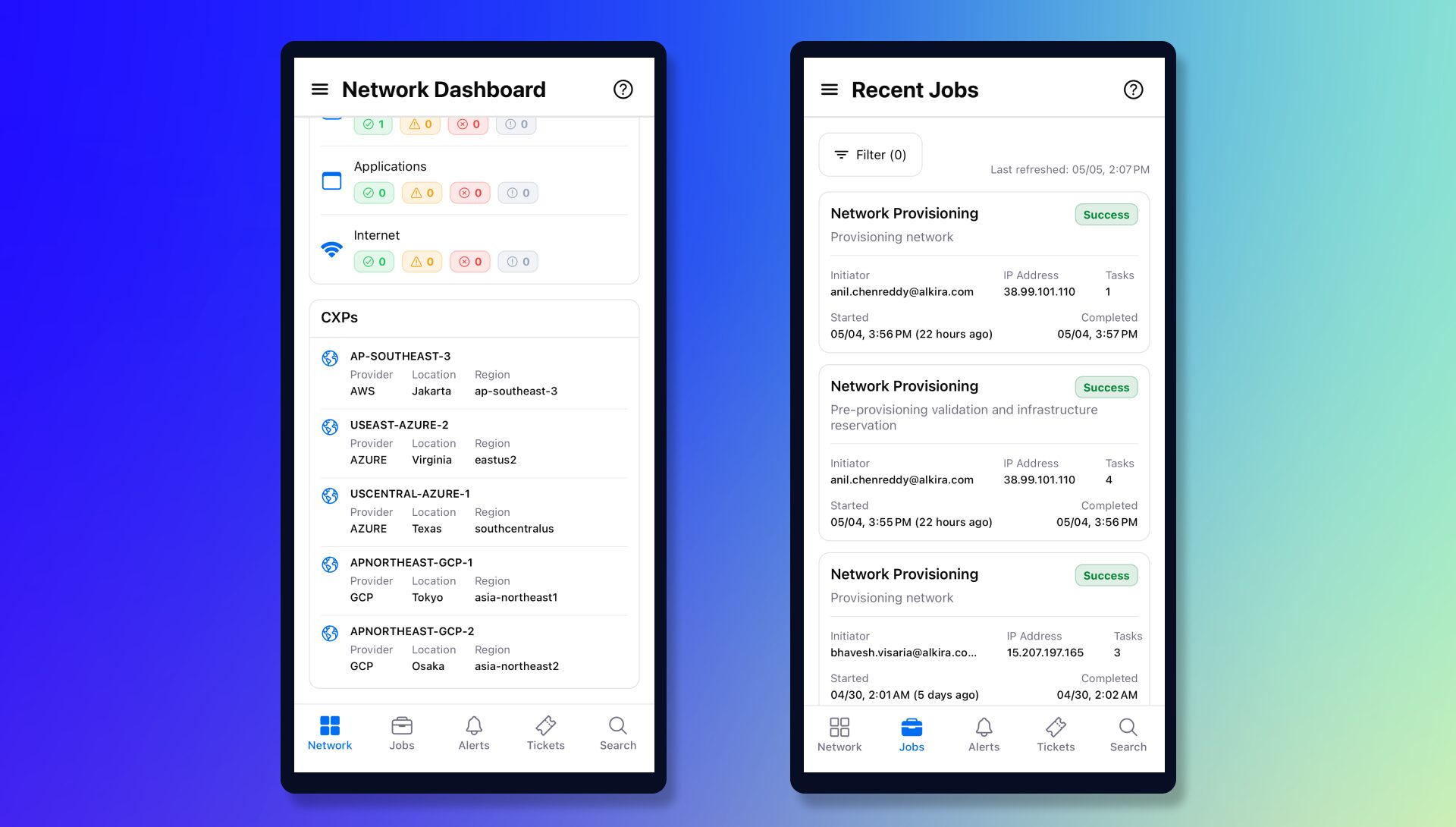
Enterprise networks are expected to run 24/7, and the teams responsible for them need visibility wherever work happens. Cloud environments, partner connections, security services, and provisioning workflows are constantly changing. When something needs attention, network and operations teams need a fast way to understand what happened, assess impact, and take the right next step. That...
Enterprises are moving quickly on AI, but many are still running networking models designed for a slower, more centralized and static era. Today’s network has to connect clouds, data centers, campuses, branches, partner environments, and increasingly private AI infrastructure while enforcing consistent policy across all of it. That creates a new operational reality: every new...
The Digital Operational Resilience Act (DORA) is reshaping how financial institutions in the European Union manage operational risk related to information and communication technology (ICT). As the regulation takes effect, organizations must ensure that their critical ICT service providers support strong operational resilience, risk management, and oversight capabilities. For technology providers supporting financial institutions, this...