
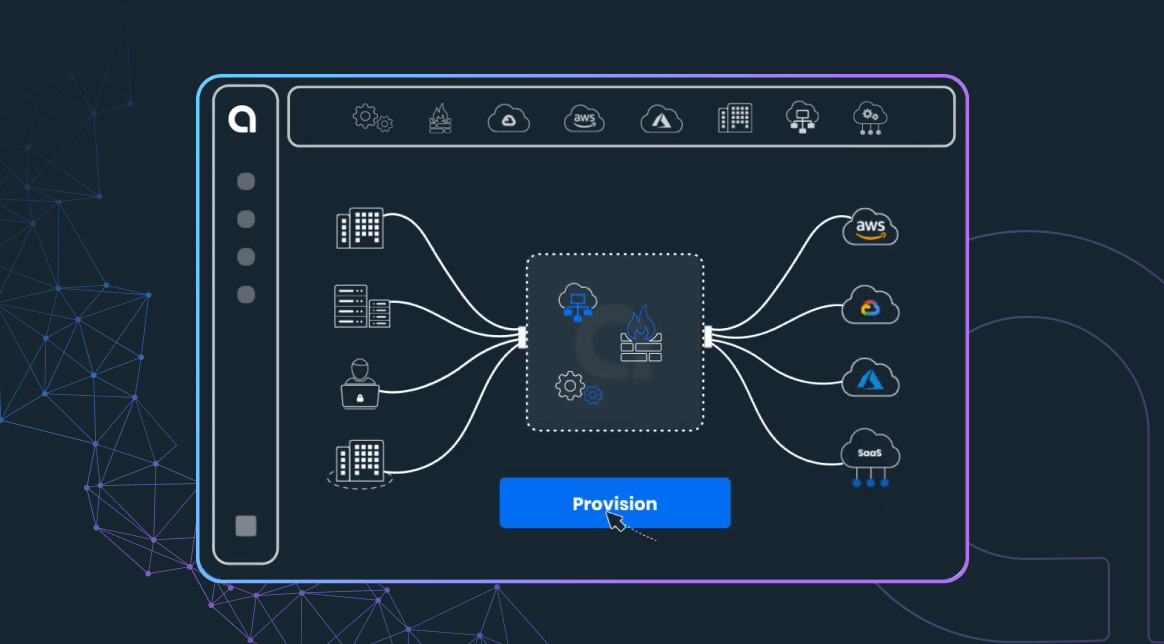
Alkira’s Cloud Network-as-a-Service is the first global unified multi-cloud networking backbone
delivered as a service.
Alkira allows customers to use a One Architecture approach to quickly onboard their cloud workload (VPCs, VNETs, VCNs, etc.) to the Alkira Cloud Exchange Points (CXPs) and consolidate or optimize their infrastructure footprint. Alkira CNaaS offers the same approach for connecting on-premise infrastructure to Alkira CXPs by leveraging various methods, including AWS Direct Connect, Azure Express Routes, and IPsec/SD-WAN Connections from their DCs and branches.
Alkira’s solution also allows customers who would like to inspect the traffic between on-premise to cloud or multi-cloud environments to use a policy-driven framework to inspect traffic as per the requirements.
Before we jump into the Alkira Approach, let’s look at the CSP Native approach to solve the different use cases for Cloud connectivity.
CSP Native Approach:
Case 1: Single Cloud Single Region connectivity
In the traditional Cloud Service Provider (CSP) approach for single cloud region connectivity, a CSP native transit construct provides connectivity to VPC/VNET/VCNs. There is a security VPC/VNET as well for traffic inspection.
The routing needs to be set up hop-by-hop for each VPC/VNETs/VCN within the region and on the CSP Transit to ensure end-to-end connectivity works as expected. The transit routing needs to be set up depending on the specific CSP to establish connectivity.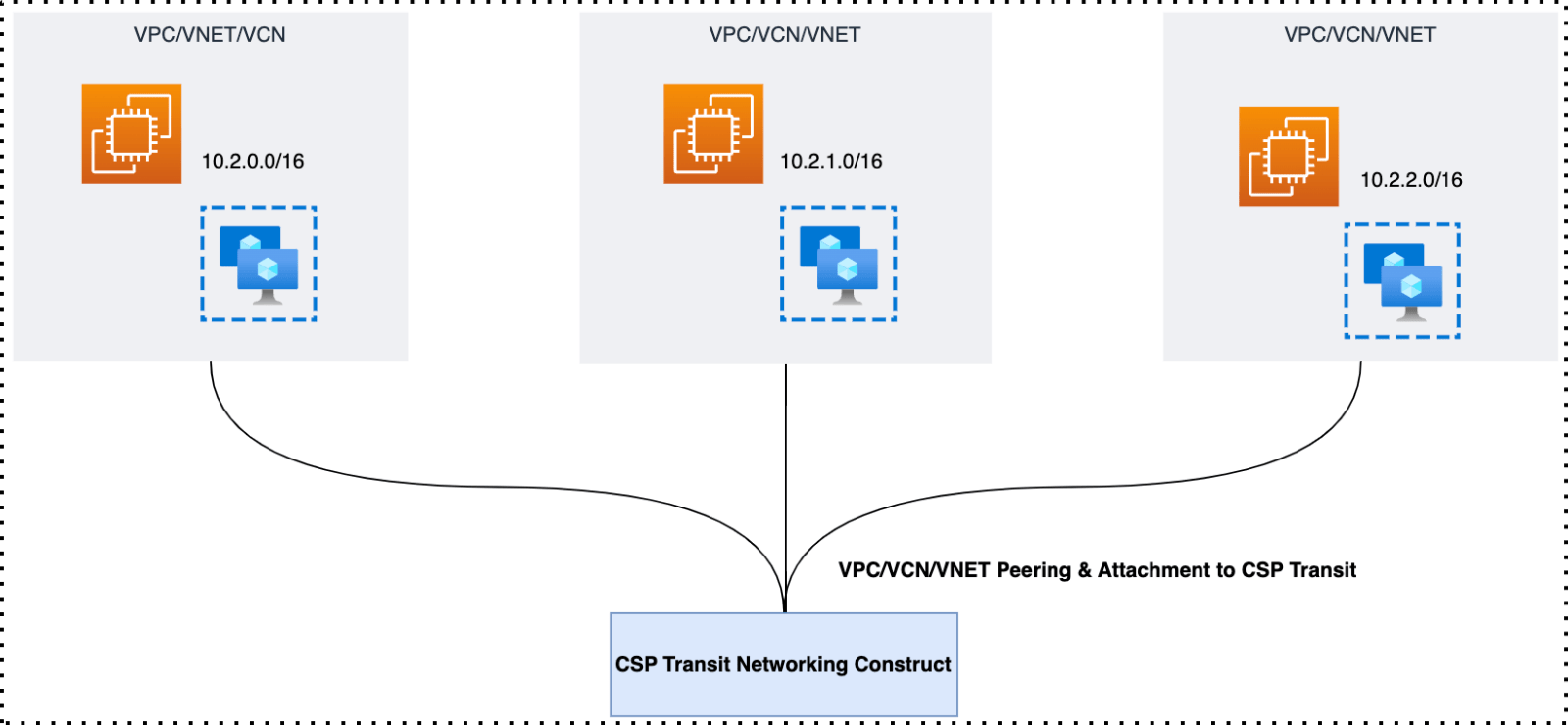 Figure 1: Cloud-native connectivity for a single region
Case 2: Single Cloud Multi Region connectivity
In this case, multiple CSP transits will be used to connect multiple regions. As in the previous case, hop-by-hop routing will be needed for each of the specific VPC/VNET/VCN and the CSP transit. The multi-region connectivity will also involve establishing peering connections between the multiple transits in different regions to establish end-to-end connectivity.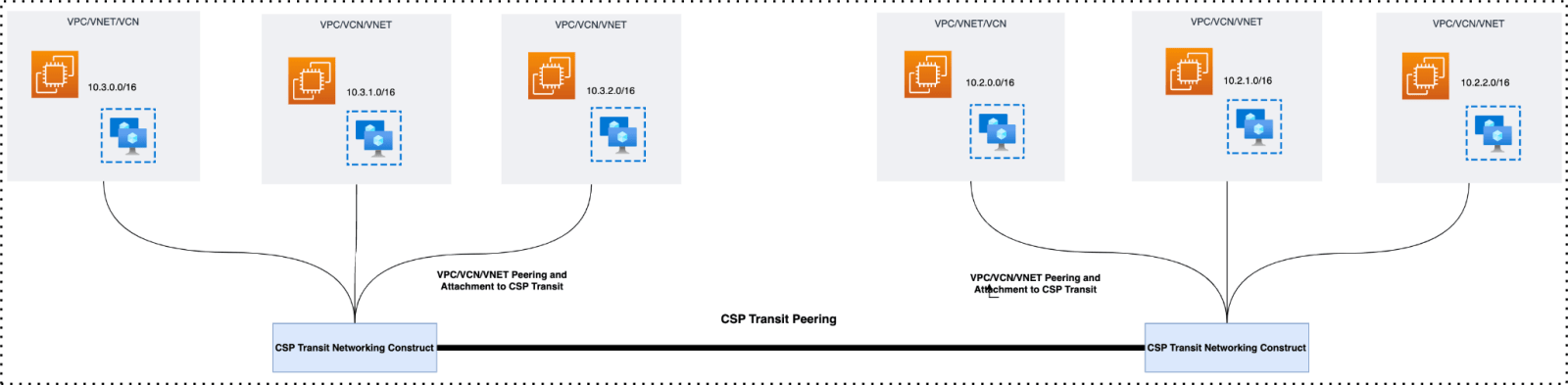 Figure 2: Cloud-native connectivity for single cloud and multi-region
Case 3: Multi-Cloud, Multi-Region Connectivity
In this case, multiple CSP transits will be used to connect multiple regions as in the previous case; in addition to achieving connectivity between multiple clouds either via private connectivity (Direct Connect/Express Route) or public internet (IPsec), routing will need to be set up on the CSP transits. Also, users must set up redundant connections between multiple clouds to consider redundancy requirements.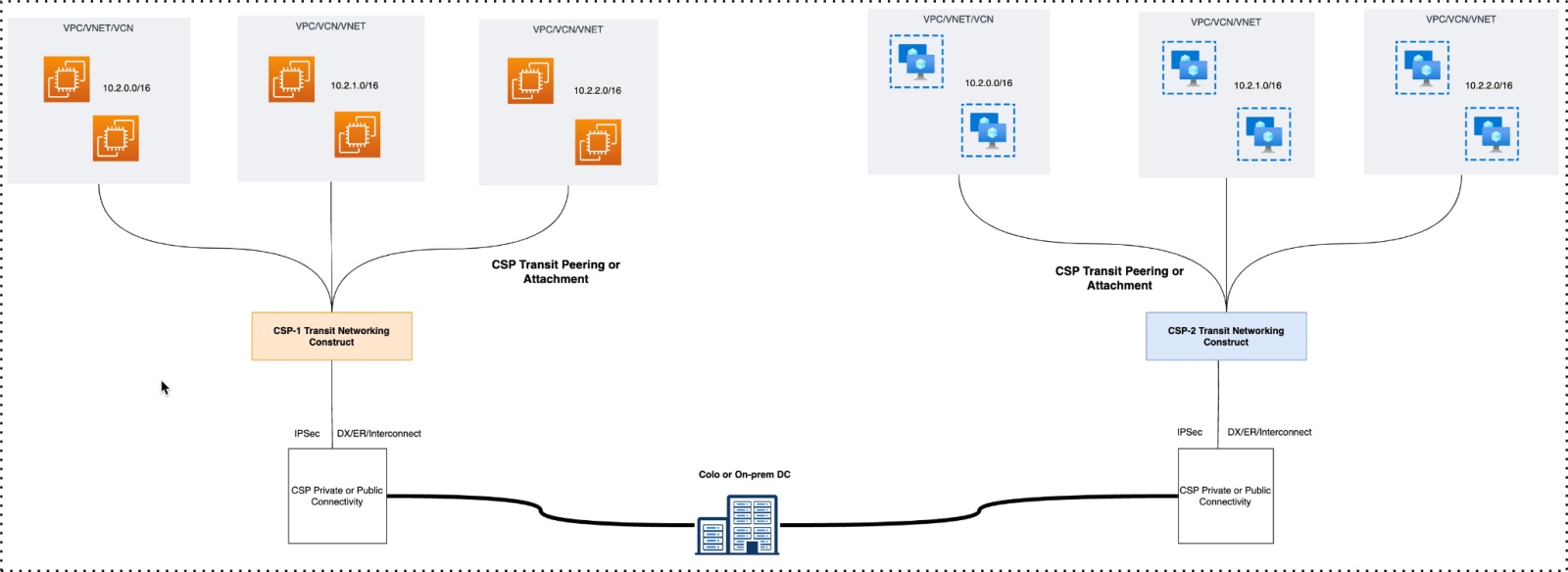
Figure 3: Multi-Cloud connectivity
Problem with this Approach:
Design Challenge
When a large-scale deployment is done, the design will look different for the above three use cases. In a single cloud with multiple regions, setting up the routing between transit constructs becomes a challenge depending on the number of regions. The challenges are even more significant if the same design is used in a multi-cloud environment.
Operational Complexity
Managing route tables across multiple regions or clouds brings an operational challenge where the user must configure the next hop for traffic flows at multiple places to get the end-to-end traffic flow working.
Configuration
Different CSPs have different networking constructs in a multi-cloud environment, so configuring each will be complex, and managing these resources will be time-consuming. Also, each CSP has its own set of limitations for these resources, which creates a design problem for solving different use cases.
Visibility/Troubleshooting
Visibility into traffic is a challenge in any CSP environment, which creates a problem in troubleshooting connectivity issues. Since multiple networking constructs exist in each CSP, figuring out where the issue lies is a challenge.
The Alkira Approach is Different
The Alkira approach is different because CXPs can be deployed in regions depending on where the workloads or applications exist. The CXPs do not need to be deployed in all of the regions or CSPs; this gives flexibility to the user to deploy the Alkira CXP closer to their critical applications or workloads agnostic to the CSP presence.
The Alkira CXPs act as the centralized hub for these cloud environments, and hence routing is simplified where multiple next hops do not need to be configured.
Whether the deployment is in a single-cloud or multi-cloud environment, the CXPs can handle traffic from all regions. Another advantage is that the connectivity can be seamlessly extended from a single region to a multi-region or to a multi-cloud environment without configuring multiple CSP constructs and the routing for each of these constructs.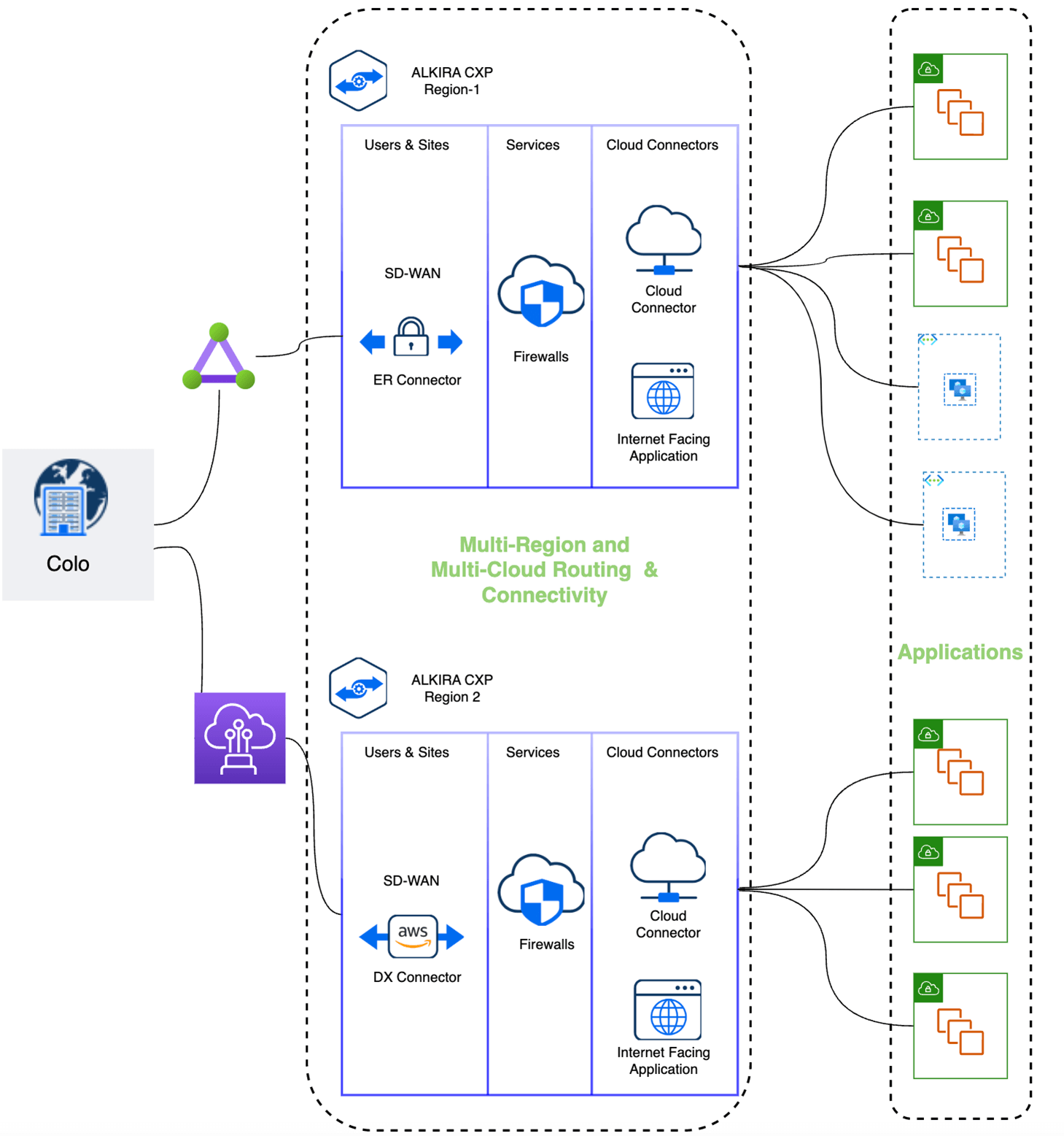 Figure 4: Multi-Cloud connectivity using Alkira CXPs
Alkira Solution Benefits:
Cost-Effective
In the Alkira solution, CXPs can be set up based on customer requirements and user connectivity. Hence, deploying the CXPs in every region and CSP is optional. The CXP can be the centralized hub for multi-region and multi-cloud connectivity.
Optimized & Efficient Design
From a design perspective, having Alkira CXPs makes managing the routing and traffic flows for a multi-region and multi-cloud environment simpler and easier to scale.
Troubleshooting
Troubleshooting tools such as Packet capture, flow capture, ping, and traceroute are part of the solution and help find the root cause of connectivity issues, making managing this complex ecosystem a breeze!
Schedule a demo today, and our team of experts will be happy to show you how Alkira can provide seamless connectivity for multi-cloud environments.
About the Authors : Ahmed Abeer & Deepesh Kumar

Ahmed Abeer