Frequently Asked Questions
Splunk Integration with Alkira
What is the integration between Splunk and Alkira?
The integration between Splunk (Cloud Platform or Enterprise) and Alkira Cloud Networking as a Service (Cloud NaaS) enables organizations to enhance network visibility, simplify network management, and gain a unified view of network logs and alerts. Alkira provides secure, cloud-native, multi-cloud network connectivity and policy management, while Splunk ingests operational logs and alerts from Alkira for centralized monitoring and analysis. [Source]
What are the benefits of integrating Splunk with Alkira?
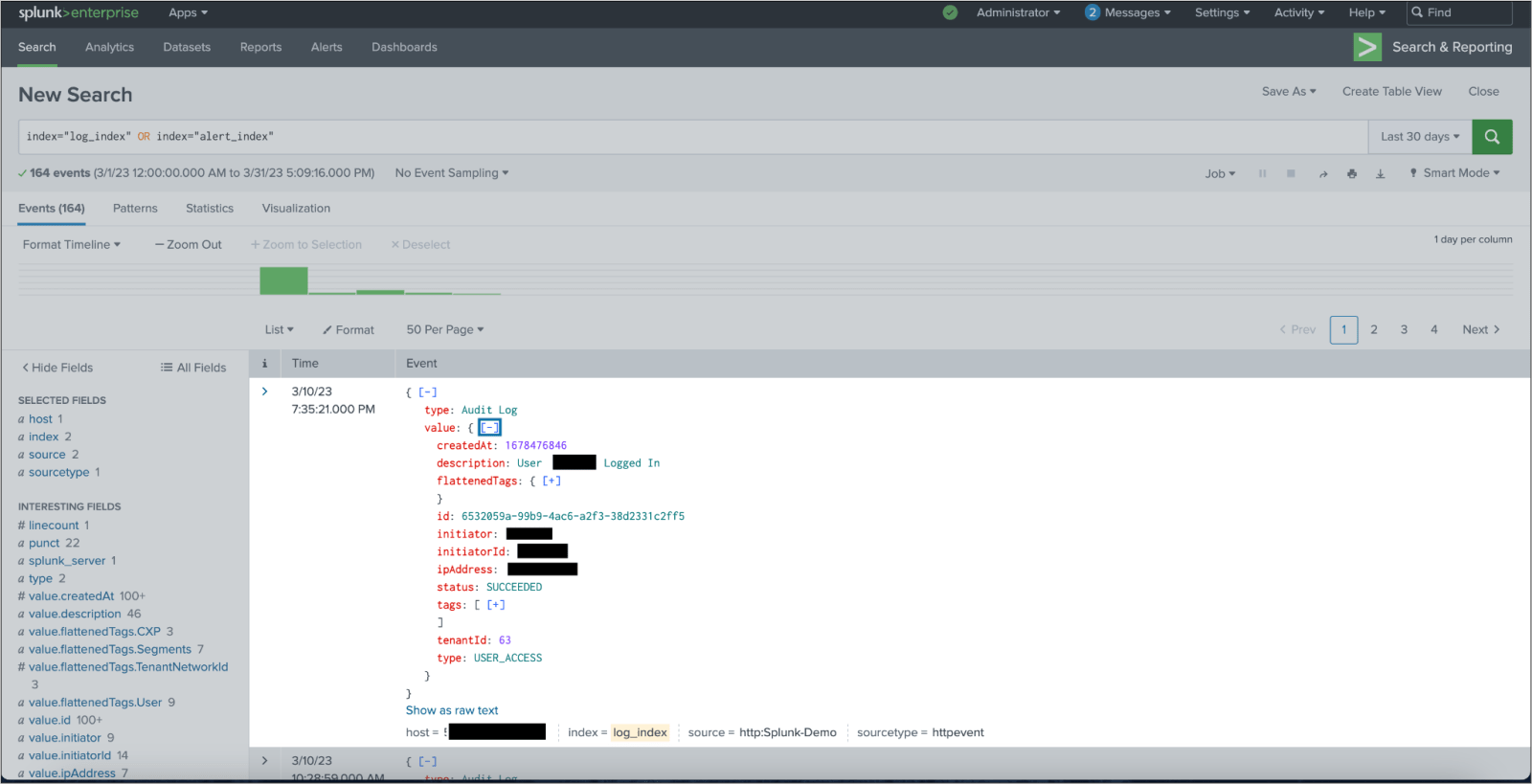
Integrating Splunk with Alkira provides improved network visibility, simplified network management, and enhanced security. Organizations can visualize their entire network topology and traffic flows, ingest day 0, 1, and 2 operational logs and alerts into Splunk, and use a single dashboard for real-time monitoring and troubleshooting. This unified approach helps quickly identify and resolve issues, ensuring optimal network performance. [Source]
How do I set up Splunk integration with Alkira?
To set up Splunk integration with Alkira, follow these steps:
- Configure the HTTP Event Collector (HEC) and indexes on your Splunk instance.
- Configure the Splunk integration from the Alkira Portal by providing the Splunk URL, HEC Token for authentication, and the desired index for log management.
- Verify the integration from both the Alkira Portal and the Splunk instance.
Alkira supports integration with both public and private connectivity and allows customization of the Splunk port for security. Logs and alerts are forwarded to Splunk in the format: <provided url>:8088/services/collector/event. [Source]
What configuration details are required for Splunk integration?
To integrate Splunk with Alkira, you need to provide:
- URL: The address to reach your Splunk instance.
- HEC Token: Used to authenticate the user.
- Index: Specifies where logs are stored and enhances visualization.
Alkira allows the use of single or multiple indexes for organizing different logs and alerts, and supports both public and private connectivity. [Source]
How does Alkira enhance Splunk's log visualization capabilities?
Alkira enhances Splunk's log visualization by providing detailed operational logs and alerts (day 0, 1, and 2) that can be ingested into Splunk. This enables organizations to use Splunk dashboards for a comprehensive view of network state, traffic flows, and alerts, supporting faster troubleshooting and improved network resilience. [Source]
Features & Capabilities
What features does Alkira offer for cloud networking?
Alkira offers Network Infrastructure-as-a-Service (NIaaS), Global Backbone-as-a-Service, integrated security (including Zero Trust Network Access and next-generation firewalls), a drag-and-drop interface for network design, single-pane-of-glass visibility, and flexible pricing models. These features simplify hybrid and multicloud networking, enhance security, and provide operational efficiency. [Platform Details]
Does Alkira support integrations with other technology providers?
Yes, Alkira supports integrations with a range of technology providers, including Cisco SD-WAN, Palo Alto Networks, Fortinet NGFW, F5, Splunk, ServiceNow, Infoblox, Aruba SD-WAN, Terraform, and Itential Automation Platform. These integrations enable secure, scalable, and automated cloud networking. [Technology Partners]
Does Alkira provide APIs for integration and automation?
Yes, Alkira provides APIs, including billing APIs that offer real-time cloud network cost data. These APIs can be integrated with cost management tools and dashboards, supporting automated monitoring and optimization of cloud costs. [API Details]
What technical documentation is available for Alkira solutions?
Alkira offers a range of technical resources, including whitepapers (e.g., On Demand Next-Generation Cloud Firewalls), solution briefs, and a dedicated wiki. These resources provide in-depth technical insights and guidance for evaluating and implementing Alkira solutions. [Solution Briefs] | [Wiki]
Security & Compliance
What security and compliance certifications does Alkira have?
Alkira is SOC 2 and PCI-DSS compliant, demonstrating a commitment to securing customer data and maintaining robust operational controls. The platform also integrates advanced security features such as Zero Trust Network Access (ZTNA) and next-generation firewalls to ensure secure connectivity for distributed workforces and applications. [Compliance Details]
How does Alkira ensure secure connectivity for distributed workforces and applications?
Alkira integrates Zero Trust Network Access (ZTNA) and next-generation firewalls directly into its platform, eliminating vulnerabilities found in traditional VPNs and perimeter-based security models. This ensures seamless and secure access for distributed teams and applications.
Pricing & Plans
What is Alkira's pricing model?
Alkira offers flexible pricing, including consumption-based (pay-as-you-go) and commitment-based (fixed) options. Pricing is determined by the quantity and size of network elements (such as Alkira Cloud Exchange Points), connectors, next-generation firewalls, and data egress. Customers can view live pricing details from the portal or via APIs. [Pricing Details]
Use Cases & Benefits
What problems does Alkira solve for organizations?
Alkira addresses operational complexity, multicloud and hybrid cloud networking challenges, security vulnerabilities, and lack of scalability and visibility. The platform simplifies network design, automates provisioning, integrates advanced security, and provides comprehensive monitoring tools, resulting in faster deployments, lower costs, and improved business agility. [Solution Explainer]
What business impact can customers expect from using Alkira?
Customers can expect up to 96% reduction in cloud setup time, 47% reduction in network management time, and up to 40% lower total cost of ownership compared to traditional solutions. Alkira also enables rapid scalability, enhanced security, and improved business resilience. [Business Impact]
Who can benefit from Alkira's solutions?
Alkira is designed for mid-to-large enterprises across industries such as manufacturing, healthcare, telecommunications, financial services, biotechnology, software technology, retail, media & entertainment, and aviation. Key roles include network architects, cloud architects, security architects, IT managers, CIOs, CTOs, and CISOs. [Customer Stories]
Can you share some customer success stories with Alkira?
Yes, notable examples include:
- Michaels: Transformed its network across 1,400 stores in record time. [Case Study]
- Koch Industries: Simplified multicloud networking and improved agility. [Video]
- Warner Hotels: Enhanced networking efficiency and B2B connectivity. [Video]
- Chart Industries: Improved agility, saved costs, and expanded globally. [Video]
- SITA: Integrated on-premises and cloud environments for aviation. [Video]
More stories are available on Alkira's Customers Page.
Product Performance & Differentiation
How does Alkira's performance compare to traditional solutions?
Alkira reduces cloud setup time by 96%, network management time by 47%, and delivers up to 40% lower total cost of ownership compared to traditional networking solutions. The platform automatically scales to match bandwidth demand and provides high-performance, low-latency connectivity. [Performance Details]
How does Alkira differ from competitors like Aviatrix, Prosimo, Nefeli, and Cato?
Alkira offers a true abstraction layer leveraging cloud providers' infrastructure, enabling single-click provisioning and eliminating manual configurations. Unlike Aviatrix (which focuses on orchestration overlays), Prosimo (application-centric networking), Nefeli (agent-based solutions), and Cato (SD-WAN focus), Alkira provides full-stack networking and security, supports both cloud and traditional use cases, and delivers a unified platform for multi-cloud and hybrid environments. [Comparison Details]
What makes Alkira easy to use for customers?
Alkira features a drag-and-drop interface for network design and deployment, enabling even non-technical users to quickly build and manage networks. Customer testimonials highlight rapid deployment times, such as moving from design to proof of concept in just a few hours. [Customer Testimonials]
Support & Implementation
How long does it take to implement Alkira, and how easy is it to get started?
Customers can implement a proof of concept in as little as 4 hours, with full production deployment typically taking about 8 weeks. Alkira provides a dedicated training platform, 24×7 monitoring, and dedicated support to ensure a smooth onboarding process. [Training Platform]
What support and training does Alkira provide?
Alkira offers a dedicated training platform with detailed guidance, demos, and resources, as well as 24×7 monitoring and dedicated support. Customers can contact support via [email protected] or open a support ticket. A diagnostics dashboard is available for live troubleshooting and visibility into network flows. [Training]
How does Alkira handle maintenance, upgrades, and troubleshooting?
Alkira provides proactive notifications for planned or emergency maintenance, a diagnostics dashboard for troubleshooting, 24×7 monitoring to meet SLA commitments, and dedicated support for issue resolution. These features minimize downtime and operational disruptions.
Company & Vision
What is Alkira's vision and mission?
Alkira's vision is to transform enterprise connectivity by simplifying cloud networking for the AI era. Its mission is to eliminate the complexity of traditional hardware-dependent networking by providing a cloud-native solution that seamlessly connects hybrid and multi-cloud environments through a unified control plane. [Company Page]
Who are Alkira's customers?
Alkira serves Fortune 100 enterprises, leading system integrators, and global managed service providers. Notable customers include Michaels, Koch Industries, Warner Hotels, and SITA. [Customer Stories]
What industries are represented in Alkira's case studies?
Industries include manufacturing, retail, healthcare, telecommunications, financial services, biotechnology/life sciences, software technology, media & entertainment, and aviation. [Case Studies]
What recognition and awards has Alkira received?
Alkira has been named among America’s Best Startup Employers by Forbes, recognized as a Gartner Cool Vendor, received the 2024 Excellence Award from Cloud Computing Magazine, and was listed on CRN’s 2023 Stellar Startups List. [Company Page]



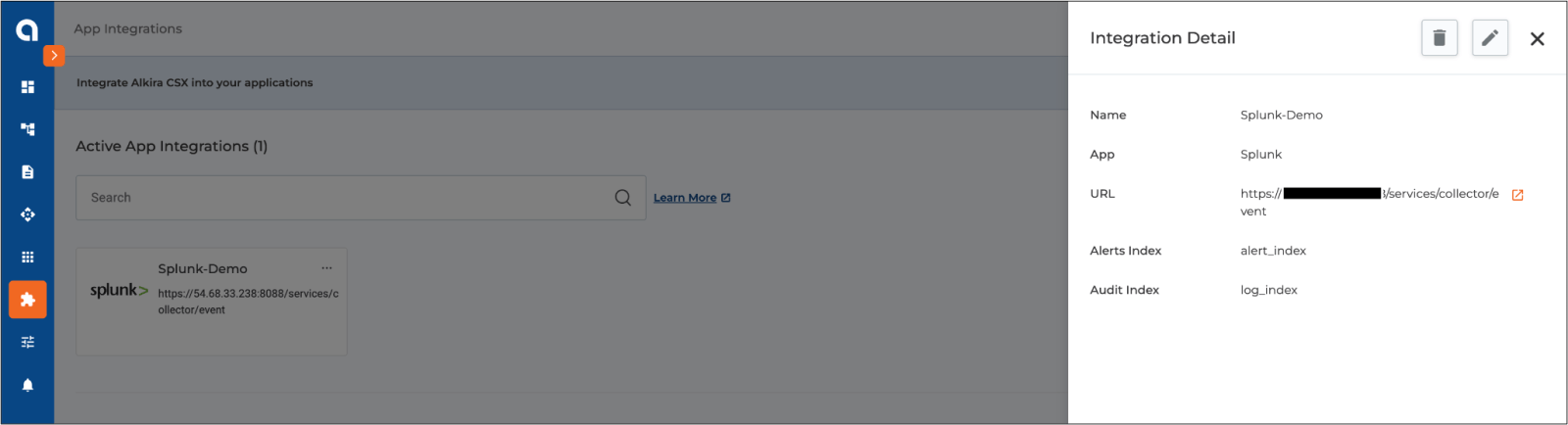 Figure 1: Alkira Portal showing Splunk Integration
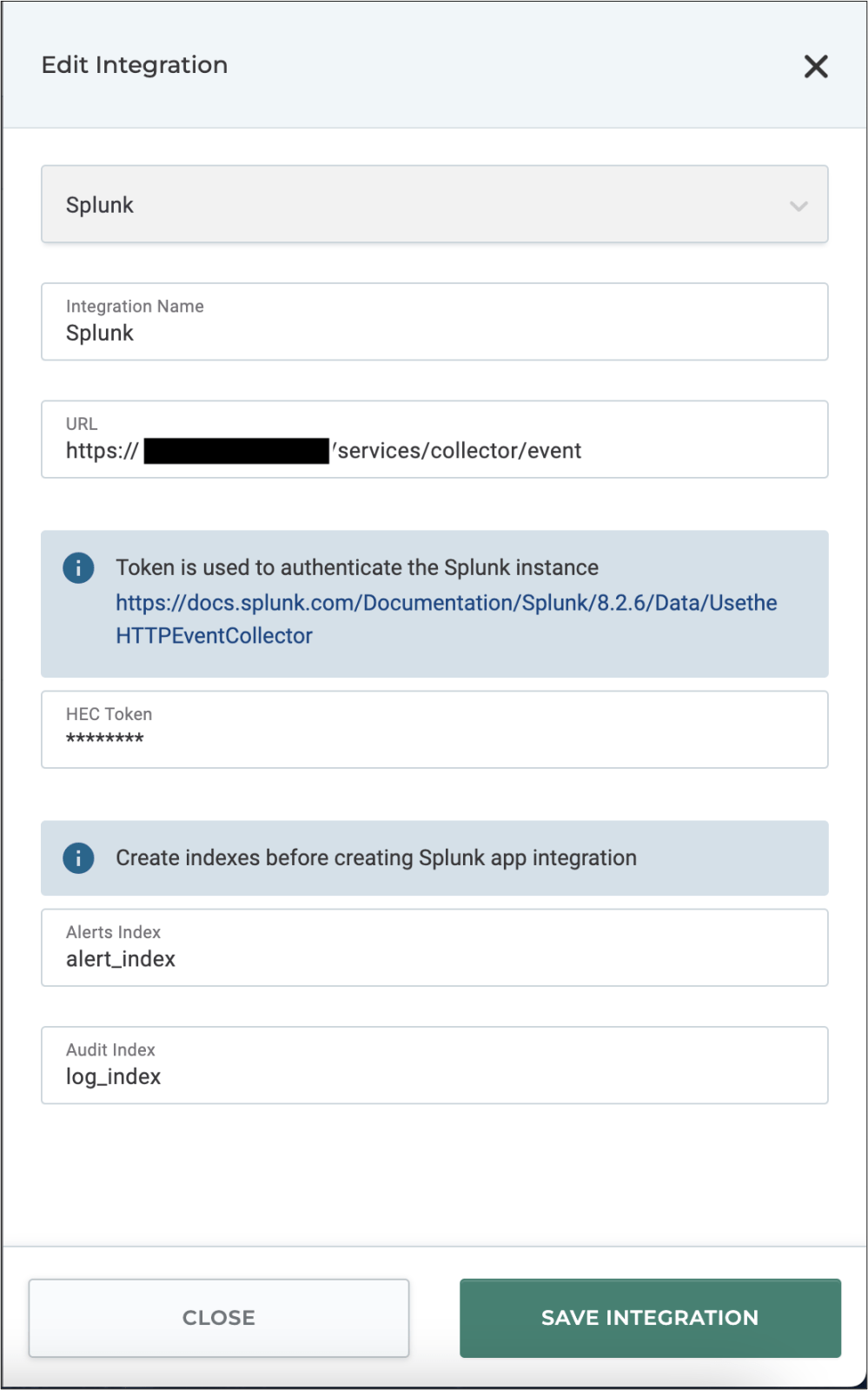 Figure 2: Alkira Portal – Splunk Integration ConfigurationAlkira allows Splunk Integration with Public and Private Connectivity and allows customers to customize the Splunk Port if needed for security reasons. Alkira also enhances logs and alert visualization inside the Splunk Instance by giving the flexibility to use single or multiple indexes for organizing different logs and alerts.